
The Cricket on the Hearth, by Charles Dickens
Transcribed from the Charles Scribner’s Sons“Works of Charles Dickens” edition by David Price,best strategy games for 8 year oldsemail [email protected]
There are several editions of this ebook in the Project Gutenberg collection. Various characteristics of each ebook are listed to aid in selecting the preferred file.
Click on any of the filenumbers below to quickly view each ebook.
| 20795 | (Some black and white illustrations) |
| 37581 | (Many fine black and white illustrations) |
| 678 | (Not illustrated) |
THE CRICKET ON THE HEARTH
A Fairy Tale of Home
TO
LORD JEFFREY
THIS LITTLE STORY IS INSCRIBED
WITH
THE AFFECTION AND ATTACHMENT OF HISFRIEND
THE AUTHOR
December, 1845
CHAPTER I—Chirp the First
The kettle began it! Don’t tell me what Mrs.Peerybingle said. I know better. Mrs. Peerybingle mayleave it on record to the end of time that she couldn’t saywhich of them began it; but, I say the kettle did. I oughtto know, I hope! The kettle began it, full five minutes bythe little waxy-faced Dutch clock in the corner, before theCricket uttered a chirp.
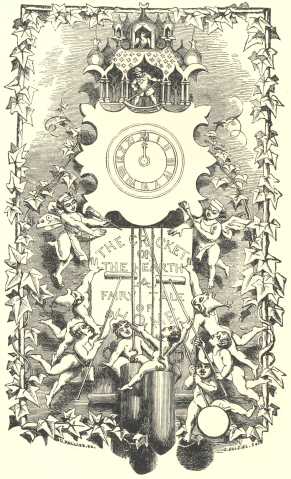
As if the clock hadn’t finished striking, and theconvulsive little Haymaker at the top of it, jerking away rightand left with a scythe in front of a Moorish Palace, hadn’tmowed down half an acre of imaginary grass before the Cricketjoined in at all!
Why, I am not naturally positive. Every one knowsthat. I wouldn’t set my own opinion against theopinion of Mrs. Peerybingle, unless I were quite sure, on anyaccount whatever. Nothing should induce me. But, thisis a question of fact. And the fact is, that the kettlebegan it, at least five minutes before the Cricket gave any signof being in existence. Contradict me, and I’ll sayten.
Let me narrate exactly how it happened. I should haveproceeded to do so in my very first word, but for this plainconsideration—if I am to tell a story I must begin at thebeginning; and how is it possible to begin at the beginning,without beginning at the kettle?
It appeared as if there were a sort of match, or trial ofskill, you must understand, between the kettle and theCricket. And this is what led to it, and how it cameabout.
Mrs. Peerybingle, going out into the raw twilight, andclicking over the wet stones in a pair of pattens that workedinnumerable rough impressions of the first proposition in Euclidall about the yard—Mrs. Peerybingle filled the kettle atthe water-butt. Presently returning, less the pattens (anda good deal less, for they were tall and Mrs. Peerybingle was butshort), she set the kettle on the fire. In doing which shelost her temper, or mislaid it for an instant; for, the waterbeing uncomfortably cold, and in that slippy, slushy, sleety sortof state wherein it seems to penetrate through every kind ofsubstance, patten rings included—had laid hold of Mrs.Peerybingle’s toes, and even splashed her legs. Andwhen we rather plume ourselves (with reason too) upon our legs,and keep ourselves particularly neat in point of stockings, wefind this, for the moment, hard to bear.
Besides, the kettle was aggravating and obstinate. Itwouldn’t allow itself to be adjusted on the top bar; itwouldn’t hear of accommodating itself kindly to the knobsof coal; it wouldlean forward with a drunken air, anddribble, a very Idiot of a kettle, on the hearth. It wasquarrelsome, and hissed and spluttered morosely at thefire. To sum up all, the lid, resisting Mrs.Peerybingle’s fingers, first of all turned topsy-turvy, andthen, with an ingenious pertinacity deserving of a better cause,dived sideways in—down to the very bottom of thekettle. And the hull of the Royal George has never madehalf the monstrous resistance to coming out of the water, whichthe lid of that kettle employed against Mrs. Peerybingle, beforeshe got it up again.
It looked sullen and pig-headed enough, even then; carryingits handle with an air of defiance, and cocking its spout pertlyand mockingly at Mrs. Peerybingle, as if it said, ‘Iwon’t boil. Nothing shall induce me!’
But Mrs. Peerybingle, with restored good humour, dusted herchubby little hands against each other, and sat down before thekettle, laughing. Meantime, the jolly blaze uprose andfell, flashing and gleaming on the little Haymaker at the top ofthe Dutch clock, until one might have thought he stood stockstill before the Moorish Palace, and nothing was in motion butthe flame.
He was on the move, however; and had his spasms, two to thesecond, all right and regular. But, his sufferings when theclock was going to strike, were frightful to behold; and, when aCuckoo looked out of a trap-door in the Palace, and gave note sixtimes, it shook him, each time, like a spectral voice—orlike a something wiry, plucking at his legs.
It was not until a violent commotion and a whirring noiseamong the weights and ropes below him had quite subsided, thatthis terrified Haymaker became himself again. Nor was hestartled without reason; for these rattling, bony skeletons ofclocks are very disconcerting in their operation, and I wondervery much how any set of men, but most of all how Dutchmen, canhave had a liking to invent them. There is a popular beliefthat Dutchmen love broad cases and much clothing for their ownlower selves; and they might know better than to leave theirclocks so very lank and unprotected, surely.
Now it was, you observe, that the kettle began to spend theevening. Now it was, that the kettle, growing mellow andmusical, began to have irrepressible gurglings in its throat, andto indulge in short vocal snorts, which it checked in the bud, asif it hadn’t quite made up its mind yet, to be goodcompany. Now it was, that after two or three such vainattempts to stifle its convivial sentiments, it threw off allmoroseness, all reserve, and burst into a stream of song so cosyand hilarious, as never maudlin nightingale yet formed the leastidea of.
So plain too! Bless you, you might have understood itlike a book—better than some books you and I could name,perhaps. With its warm breath gushing forth in a lightcloud which merrily and gracefully ascended a few feet, then hungabout the chimney-corner as its own domestic Heaven, it trolledits song with that strong energy of cheerfulness, that its ironbody hummed and stirred upon the fire; and the lid itself, therecently rebellious lid—such is the influence of a brightexample—performed a sort of jig, and clattered like a deafand dumb young cymbal that had never known the use of its twinbrother.
That this song of the kettle’s was a song of invitationand welcome to somebody out of doors: to somebody at that momentcoming on, towards the snug small home and the crisp fire: thereis no doubt whatever. Mrs. Peerybingle knew it, perfectly,as she sat musing before the hearth. It’s a darknight, sang the kettle, and the rotten leaves are lying by theway; and, above, all is mist and darkness, and, below, all ismire and clay; and there’s only one relief in all the sadand murky air; and I don’t know that it is one, forit’s nothing but a glare; of deep and angry crimson, wherethe sun and wind together; set a brand upon the clouds for beingguilty of such weather; and the widest open country is a longdull streak of black; and there’s hoar-frost on thefinger-post, and thaw upon the track; and the ice it isn’twater, and the water isn’t free; and you couldn’t saythat anything is what it ought to be; but he’s coming,coming, coming!—
And here, if you like, the Cricket DID chime in! with a Chirrup, Chirrup,Chirrup of such magnitude, by way of chorus; with a voice soastoundingly disproportionate to its size, as compared with thekettle; (size! you couldn’t see it!) that if it had thenand there burst itself like an overcharged gun, if it had fallena victim on the spot, and chirruped its little body into fiftypieces, it would have seemed a natural and inevitableconsequence, for which it had expressly laboured.
The kettle had had the last of its solo performance. Itpersevered with undiminished ardour; but the Cricket took firstfiddle and kept it. Good Heaven, how it chirped! Itsshrill, sharp, piercing voice resounded through the house, andseemed to twinkle in the outer darkness like a star. Therewas an indescribable little trill and tremble in it, at itsloudest, which suggested its being carried off its legs, and madeto leap again, by its own intense enthusiasm. Yet they wentvery well together, the Cricket and the kettle. The burdenof the song was still the same; and louder, louder, louder still,they sang it in their emulation.
The fair little listener—for fair she was, and young:though something of what is called the dumpling shape; but Idon’t myself object to that—lighted a candle, glancedat the Haymaker on the top of the clock, who was getting in apretty average crop of minutes; and looked out of the window,where she saw nothing, owing to the darkness, but her own faceimaged in the glass. And my opinion is (and so would yourshave been), that she might have looked a long way, and seennothing half so agreeable. When she came back, and sat downin her former seat, the Cricket and the kettle were still keepingit up, with a perfect fury of competition. Thekettle’s weak side clearly being, that he didn’t knowwhen he was beat.
There was all the excitement of a race about it. Chirp,chirp, chirp! Cricket a mile ahead. Hum, hum,hum—m—m! Kettle making play in the distance,like a great top. Chirp, chirp, chirp! Cricket roundthe corner. Hum, hum, hum—m—m! Kettlesticking to him in his own way; no idea of giving in. Chirp, chirp, chirp! Cricket fresher than ever. Hum,hum, hum—m—m! Kettle slow and steady. Chirp, chirp, chirp! Cricket going in to finish him. Hum, hum, hum—m—m! Kettle not to befinished. Until at last they got so jumbled together, inthe hurry-skurry, helter-skelter, of the match, that whether thekettle chirped and the Cricket hummed, or the Cricket chirped andthe kettle hummed, or they both chirped and both hummed, it wouldhave taken a clearer head than yours or mine to have decided withanything like certainty. But, of this, there is no doubt:that, the kettle and the Cricket, at one and the same moment, andby some power of amalgamation best known to themselves, sent,each, his fireside song of comfort streaming into a ray of thecandle that shone out through the window, and a long way down thelane. And this light, bursting on a certain person who, onthe instant, approached towards it through the gloom, expressedthe whole thing to him, literally in a twinkling, and cried,‘Welcome home, old fellow! Welcome home, myboy!’
This end attained, the kettle, being dead beat, boiled over,and was taken off the fire. Mrs. Peerybingle then wentrunning to the door, where, what with the wheels of a cart, thetramp of a horse, the voice of a man, the tearing in and out ofan excited dog, and the surprising and mysterious appearance of ababy, there was soon the very What’s-his-name to pay.
Where the baby came from, or how Mrs. Peerybingle got hold ofit in that flash of time, Idon’t know. But alive baby there was, in Mrs. Peerybingle’s arms; and apretty tolerable amount of pride she seemed to have in it, whenshe was drawn gently to the fire, by a sturdy figure of a man,much taller and much older than herself, who had to stoop a longway down, to kiss her. But she was worth the trouble. Six foot six, with the lumbago, might have done it.
‘Oh goodness, John!’ said Mrs. P. ‘What a state you are in with the weather!’
He was something the worse for it, undeniably. The thickmist hung in clots upon his eyelashes like candied thaw; andbetween the fog and fire together, there were rainbows in hisvery whiskers.
‘Why, you see, Dot,’ John made answer, slowly, ashe unrolled a shawl from about his throat; and warmed his hands;‘it—it an’t exactly summer weather. So,no wonder.’
‘I wish you wouldn’t call me Dot, John. Idon’t like it,’ said Mrs. Peerybingle: pouting in away that clearly showed she didlike it, very much.
‘Why what else are you?’ returned John, lookingdown upon her with a smile, and giving her waist as light asqueeze as his huge hand and arm could give. ‘A dotand’—here he glanced at the baby—‘a dotand carry—I won’t say it, for fear I should spoil it;but I was very near a joke. I don’t know as ever Iwas nearer.’
He was often near to something or other very clever, by hisown account: this lumbering, slow, honest John; this John soheavy, but so light of spirit; so rough upon the surface, but sogentle at the core; so dull without, so quick within; so stolid,but so good! Oh Mother Nature, give thy children the truepoetry of heart that hid itself in this poor Carrier’sbreast—he was but a Carrier by the way—and we canbear to have them talking prose, and leading lives of prose; andbear to bless thee for their company!
It was pleasant to see Dot, with her little figure, and herbaby in her arms: a very doll of a baby: glancing with acoquettish thoughtfulness at the fire, and inclining her delicatelittle head just enough on one side to let it rest in an odd,half-natural, half-affected, wholly nestling and agreeablemanner, on the great rugged figure of the Carrier. It waspleasant to see him, with his tender awkwardness, endeavouring toadapt his rude support to her slight need, and make his burlymiddle-age a leaning-staff not inappropriate to her bloomingyouth. It was pleasant to observe how Tilly Slowboy,waiting in the background for the baby, took special cognizance(though in her earliest teens) of this grouping; and stood withher mouth and eyes wide open, and her head thrust forward, takingit in as if it were air. Nor was it less agreeable toobserve how John the Carrier, reference being made by Dot to theaforesaid baby, checked his hand when on the point of touchingthe infant, as if he thought he might crack it; and bending down,surveyed it from a safe distance, with a kind of puzzled pride,such as an amiable mastiff might be supposed to show, if he foundhimself, one day, the father of a young canary.
‘An’t he beautiful, John? Don’t helook precious in his sleep?’
‘Very precious,’ said John. ‘Very muchso. He generally isasleep, an’the?’
‘Lor, John! Good gracious no!’
‘Oh,’ said John, pondering. ‘I thoughthis eyes was generally shut. Halloa!’
‘Goodness, John, how you startle one!’
‘It an’t right for him to turn ’em up inthat way!’ said the astonished Carrier, ‘is it? See how he’s winking with both of ’em at once! And look at his mouth! Why he’s gasping like a goldand silver fish!’
‘You don’t deserve to be a father, youdon’t,’ said Dot, with all the dignity of anexperienced matron. ‘But how should you know whatlittle complaints children are troubled with, John! Youwouldn’t so much as know their names, you stupidfellow.’ And when she had turned the baby over on herleft arm, and had slapped its back as a restorative, she pinchedher husband’s ear, laughing.
‘No,’ said John, pulling off his outer coat. ‘It’s very true, Dot. I don’t know muchabout it. I only know that I’ve been fighting prettystiffly with the wind to-night. It’s been blowingnorth-east, straight into the cart, the whole wayhome.’
‘Poor old man, so it has!’ cried Mrs. Peerybingle,instantly becoming very active. ‘Here! Take theprecious darling, Tilly, while I make myself of some use. Bless it, I could smother it with kissing it, I could! Hiethen, good dog! Hie, Boxer, boy! Only let me make thetea first, John; and then I’ll help you with the parcels,like a busy bee. “How doth thelittle”—and all the rest of it, you know, John. Did you ever learn “how doth the little,” when youwent to school, John?’
‘Not to quite know it,’ John returned. ‘I was very near it once. But I should only havespoilt it, I dare say.’
‘Ha ha,’ laughed Dot. She had the blithestlittle laugh you ever heard. ‘What a dear old darlingof a dunce you are, John, to be sure!’
Not at all disputing this position, John went out to see thatthe boy with the lantern, which had been dancing to and frobefore the door and window, like a Will of the Wisp, took duecare of the horse; who was fatter than you would quite believe,if I gave you his measure, and so old that his birthday was lostin the mists of antiquity. Boxer, feeling that hisattentions were due to the family in general, and must beimpartially distributed, dashed in and out with bewilderinginconstancy; now, describing a circle of short barks round thehorse, where he was being rubbed down at the stable-door; nowfeigning to make savage rushes at his mistress, and facetiouslybringing himself to sudden stops; now, eliciting a shriek fromTilly Slowboy, in the low nursing-chair near the fire, by theunexpected application of his moist nose to her countenance; now,exhibiting an obtrusive interest in the baby; now, going roundand round upon the hearth, and lying down as if he hadestablished himself for the night; now, getting up again, andtaking that nothing of a fag-end of a tail of his, out into theweather, as if he had just remembered an appointment, and wasoff, at a round trot, to keep it.
‘There! There’s the teapot, ready on thehob!’ said Dot; as briskly busy as a child at play atkeeping house. ‘And there’s the old knuckle ofham; and there’s the butter; and there’s the crustyloaf, and all! Here’s the clothes-basket for thesmall parcels, John, if you’ve got any there—whereare you, John?’
‘Don’t let the dear child fall under the grate,Tilly, whatever you do!’
It may be noted of Miss Slowboy, in spite of her rejecting thecaution with some vivacity, that she had a rare and surprisingtalent for getting this baby into difficulties and had severaltimes imperilled its short life, in a quiet way peculiarly herown. She was of a spare and straight shape, this younglady, insomuch that her garments appeared to be in constantdanger of sliding off those sharp pegs, her shoulders, on whichthey were loosely hung. Her costume was remarkable for thepartial development, on all possible occasions, of some flannelvestment of a singular structure; also for affording glimpses, inthe region of the back, of a corset, or pair of stays, in coloura dead-green. Being always in a state of gaping admirationat everything, and absorbed, besides, in the perpetualcontemplation of her mistress’s perfections and thebaby’s, Miss Slowboy, in her little errors of judgment, maybe said to have done equal honour to her head and to her heart;and though these did less honour to the baby’s head, whichthey were the occasional means of bringing into contact with dealdoors, dressers, stair-rails, bed-posts, and other foreignsubstances, still they were the honest results of TillySlowboy’s constant astonishment at finding herself sokindly treated, and installed in such a comfortable home. For, the maternal and paternal Slowboy were alike unknown toFame, and Tilly had been bred by public charity, a foundling;which word, though only differing from fondling by onevowel’s length, is very different in meaning, and expressesquite another thing.
To have seen little Mrs. Peerybingle come back with herhusband, tugging at the clothes-basket, and making the moststrenuous exertions to do nothing at all (for he carried it),would have amused you almost as much as it amused him. Itmay have entertained the Cricket too, for anything I know; but,certainly, it now began to chirp again, vehemently.
‘Heyday!’ said John, in his slow way. ‘It’s merrier than ever, to-night, Ithink.’
‘And it’s sure to bring us good fortune,John! It always has done so. To have a Cricket on theHearth, is the luckiest thing in all the world!’
John looked at her as if he had very nearly got the thoughtinto his head, that she was his Cricket in chief, and he quiteagreed with her. But, it was probably one of his narrowescapes, for he said nothing.
‘The first time I heard its cheerful little note, John,was on that night when you brought me home—when you broughtme to my new home here; its little mistress. Nearly a yearago. You recollect, John?’
O yes. John remembered. I should think so!
‘Its chirp was such a welcome to me! It seemed sofull of promise and encouragement. It seemed to say, youwould be kind and gentle with me, and would not expect (I had afear of that, John, then) to find an old head on the shoulders ofyour foolish little wife.’
John thoughtfully patted one of the shoulders, and then thehead, as though he would have said No, no; he had had no suchexpectation; he had been quite content to take them as theywere. And really he had reason. They were verycomely.
‘It spoke the truth, John, when it seemed to say so; foryou have ever been, I am sure, the best, the most considerate,the most affectionate of husbands to me. This has been ahappy home, John; and I love the Cricket for its sake!’
‘Why so do I then,’ said the Carrier. ‘So do I, Dot.’
‘I love it for the many times I have heard it, and themany thoughts its harmless music has given me. Sometimes,in the twilight, when I have felt a little solitary anddown-hearted, John—before baby was here to keep me companyand make the house gay—when I have thought how lonely youwould be if I should die; how lonely I should be if I could knowthat you had lost me, dear; its Chirp, Chirp, Chirp upon thehearth, has seemed to tell me of another little voice, so sweet,so very dear to me, before whose coming sound my trouble vanishedlike a dream. And when I used to fear—I did fearonce, John, I was very young you know—that ours might proveto be an ill-assorted marriage, I being such a child, and youmore like my guardian than my husband; and that you might not,however hard you tried, be able to learn to love me, as you hopedand prayed you might; its Chirp, Chirp, Chirp has cheered me upagain, and filled me with new trust and confidence. I wasthinking of these things to-night, dear, when I sat expectingyou; and I love the Cricket for their sake!’
‘And so do I,’ repeated John. ‘But,Dot? Ihope and pray that I might learn to loveyou? How you talk! I had learnt that, long before Ibrought you here, to be the Cricket’s little mistress,Dot!’
She laid her hand, an instant, on his arm, and looked up athim with an agitated face, as if she would have told himsomething. Next moment she was down upon her knees beforethe basket, speaking in a sprightly voice, and busy with theparcels.
‘There are not many of them to-night, John, but I sawsome goods behind the cart, just now; and though they give moretrouble, perhaps, still they pay as well; so we have no reason togrumble, have we? Besides, you have been delivering, I daresay, as you came along?’
‘Oh yes,’ John said. ‘A goodmany.’
‘Why what’s this round box? Heart alive,John, it’s a wedding-cake!’
‘Leave a woman alone to find out that,’ said John,admiringly. ‘Now a man would never have thought ofit. Whereas, it’s my belief that if you was to pack awedding-cake up in a tea-chest, or a turn-up bedstead, or apickled salmon keg, or any unlikely thing, a woman would be sureto find it out directly. Yes; I called for it at thepastry-cook’s.’
‘And it weighs I don’t know what—wholehundredweights!’ cried Dot, making a great demonstration oftrying to lift it.
‘Whose is it, John? Where is it going?’
‘Read the writing on the other side,’ saidJohn.
‘Why, John! My Goodness, John!’
‘Ah! who’d have thought it!’ Johnreturned.
‘You never mean to say,’ pursued Dot, sitting onthe floor and shaking her head at him, ‘that it’sGruff and Tackleton the toymaker!’
John nodded.
Mrs. Peerybingle nodded also, fifty times at least. Notin assent—in dumb and pitying amazement; screwing up herlips the while with all their little force (they were never madefor screwing up; I am clear of that), and looking the goodCarrier through and through, in her abstraction. MissSlowboy, in the mean time, who had a mechanical power ofreproducing scraps of current conversation for the delectation ofthe baby, with all the sense struck out of them, and all thenouns changed into the plural number, inquired aloud of thatyoung creature, Was it Gruffs and Tackletons the toymakers then,and Would it call at Pastry-cooks for wedding-cakes, and Did itsmothers know the boxes when its fathers brought them homes; andso on.
‘And that is really to come about!’ saidDot. ‘Why, she and I were girls at school together,John.’
He might have been thinking of her, or nearly thinking of her,perhaps, as she was in that same school time. He lookedupon her with a thoughtful pleasure, but he made no answer.
‘And he’s as old! As unlike her!—Why,how many years older than you, is Gruff and Tackleton,John?’
‘How many more cups of tea shall I drink to-night at onesitting, than Gruff and Tackleton ever took in four, Iwonder!’ replied John, good-humouredly, as he drew a chairto the round table, and began at the cold ham. ‘As toeating, I eat but little; but that little I enjoy,Dot.’
Even this, his usual sentiment at meal times, one of hisinnocent delusions (for his appetite was always obstinate, andflatly contradicted him), awoke no smile in the face of hislittle wife, who stood among the parcels, pushing the cake-boxslowly from her with her foot, and never once looked, though hereyes were cast down too, upon the dainty shoe she generally wasso mindful of. Absorbed in thought, she stood there,heedless alike of the tea and John (although he called to her,and rapped the table with his knife to startle her), until herose and touched her on the arm; when she looked at him for amoment, and hurried to her place behind the teaboard, laughing ather negligence. But, not as she had laughed before. The manner and the music were quite changed.
The Cricket, too, had stopped. Somehow the room was notso cheerful as it had been. Nothing like it.
‘So, these are all the parcels, are they, John?’she said, breaking a long silence, which the honest Carrier haddevoted to the practical illustration of one part of hisfavourite sentiment—certainly enjoying what he ate, if itcouldn’t be admitted that he ate but little. ‘So, these are all the parcels; are they, John?’
‘That’s all,’ said John. ‘Why—no—I—’ laying down his knifeand fork, and taking a long breath. ‘Ideclare—I’ve clean forgotten the oldgentleman!’
‘The old gentleman?’
‘In the cart,’ said John. ‘He wasasleep, among the straw, the last time I saw him. I’ve very nearly remembered him, twice, since I came in;but he went out of my head again. Halloa! Yahipthere! Rouse up! That’s my hearty!’
John said these latter words outside the door, whither he hadhurried with the candle in his hand.
Miss Slowboy, conscious of some mysterious reference to TheOld Gentleman, and connecting in her mystified imaginationcertain associations of a religious nature with the phrase, wasso disturbed, that hastily rising from the low chair by the fireto seek protection near the skirts of her mistress, and cominginto contact as she crossed the doorway with an ancient Stranger,she instinctively made a charge or butt at him with the onlyoffensive instrument within her reach. This instrumenthappening to be the baby, great commotion and alarm ensued, whichthe sagacity of Boxer rather tended to increase; for, that gooddog, more thoughtful than its master, had, it seemed, beenwatching the old gentleman in his sleep, lest he should walk offwith a few young poplar trees that were tied up behind the cart;and he still attended on him very closely, worrying his gaitersin fact, and making dead sets at the buttons.
‘You’re such an undeniable good sleeper,sir,’ said John, when tranquillity was restored; in themean time the old gentleman had stood, bareheaded and motionless,in the centre of the room; ‘that I have half a mind to askyou where the other six are—only that would be a joke, andI know I should spoil it. Very near though,’ murmuredthe Carrier, with a chuckle; ‘very near!’
The Stranger, who had long white hair, good features,singularly bold and well defined for an old man, and dark,bright, penetrating eyes, looked round with a smile, and salutedthe Carrier’s wife by gravely inclining his head.
His garb was very quaint and odd—a long, long way behindthe time. Its hue was brown, all over. In his hand heheld a great brown club or walking-stick; and striking this uponthe floor, it fell asunder, and became a chair. On which hesat down, quite composedly.
‘There!’ said the Carrier, turning to hiswife. ‘That’s the way I found him, sitting bythe roadside! Upright as a milestone. And almost asdeaf.’
‘Sitting in the open air, John!’
‘In the open air,’ replied the Carrier,‘just at dusk. “Carriage Paid,” he said;and gave me eighteenpence. Then he got in. And therehe is.’
‘He’s going, John, I think!’
Not at all. He was only going to speak.
‘If you please, I was to be left till called for,’said the Stranger, mildly. ‘Don’t mindme.’
With that, he took a pair of spectacles from one of his largepockets, and a book from another, and leisurely began toread. Making no more of Boxer than if he had been a houselamb!
The Carrier and his wife exchanged a look of perplexity. The Stranger raised his head; and glancing from the latter to theformer, said,
‘Your daughter, my good friend?’
‘Wife,’ returned John.
‘Niece?’ said the Stranger.
‘Wife,’ roared John.
‘Indeed?’ observed the Stranger. ‘Surely? Very young!’
He quietly turned over, and resumed his reading. But,before he could have read two lines, he again interrupted himselfto say:
‘Baby, yours?’
John gave him a gigantic nod; equivalent to an answer in theaffirmative, delivered through a speaking trumpet.
‘Girl?’
‘Bo-o-oy!’ roared John.
‘Also very young, eh?’
Mrs. Peerybingle instantly struck in. ‘Two monthsand three da-ays! Vaccinated just six weeks ago-o! Took very fine-ly! Considered, by the doctor, a remarkablybeautiful chi-ild! Equal to the general run of children atfive months o-old! Takes notice, in a way quitewon-der-ful! May seem impossible to you, but feels his legsal-ready!’
Here the breathless little mother, who had been shriekingthese short sentences into the old man’s ear, until herpretty face was crimsoned, held up the Baby before him as astubborn and triumphant fact; while Tilly Slowboy, with amelodious cry of ‘Ketcher, Ketcher’—whichsounded like some unknown words, adapted to a popularSneeze—performed some cow-like gambols round that allunconscious Innocent.
‘Hark! He’s called for, sure enough,’said John. ‘There’s somebody at the door. Open it, Tilly.’
Before she could reach it, however, it was opened fromwithout; being a primitive sort of door, with a latch, that anyone could lift if he chose—and a good many people didchoose, for all kinds of neighbours liked to have a cheerful wordor two with the Carrier, though he was no great talkerhimself. Being opened, it gave admission to a little,meagre, thoughtful, dingy-faced man, who seemed to have madehimself a great-coat from the sack-cloth covering of some oldbox; for, when he turned to shut the door, and keep the weatherout, he disclosed upon the back of that garment, the inscriptionG & T in large black capitals. Also the word GLASS inbold characters.
‘Good evening, John!’ said the little man. ‘Good evening, Mum. Good evening, Tilly. Goodevening, Unbeknown! How’s Baby, Mum? Boxer’s pretty well I hope?’
‘All thriving, Caleb,’ replied Dot. ‘Iam sure you need only look at the dear child, for one, to knowthat.’
‘And I’m sure I need only look at you foranother,’ said Caleb.
He didn’t look at her though; he had a wandering andthoughtful eye which seemed to be always projecting itself intosome other time and place, no matter what he said; a descriptionwhich will equally apply to his voice.
‘Or at John for another,’ said Caleb. ‘Or at Tilly, as far as that goes. Or certainly atBoxer.’
‘Busy just now, Caleb?’ asked the Carrier.
‘Why, pretty well, John,’ he returned, with thedistraught air of a man who was casting about for thePhilosopher’s stone, at least. ‘Pretty muchso. There’s rather a run on Noah’s Arks atpresent. I could have wished to improve upon the Family,but I don’t see how it’s to be done at theprice. It would be a satisfaction to one’s mind, tomake it clearer which was Shems and Hams, and which wasWives. Flies an’t on that scale neither, as comparedwith elephants you know! Ah! well! Have you gotanything in the parcel line for me, John?’
The Carrier put his hand into a pocket of the coat he hadtaken off; and brought out, carefully preserved in moss andpaper, a tiny flower-pot.
‘There it is!’ he said, adjusting it with greatcare. ‘Not so much as a leaf damaged. Full ofbuds!’
Caleb’s dull eye brightened, as he took it, and thankedhim.
‘Dear, Caleb,’ said the Carrier. ‘Verydear at this season.’
‘Never mind that. It would be cheap to me,whatever it cost,’ returned the little man. ‘Anything else, John?’
‘A small box,’ replied the Carrier. ‘Here you are!’
‘“For Caleb Plummer,”’ said the littleman, spelling out the direction. ‘“WithCash.” With Cash, John? I don’t thinkit’s for me.’
‘With Care,’ returned the Carrier, looking overhis shoulder. ‘Where do you make out cash?’
‘Oh! To be sure!’ said Caleb. ‘It’s all right. With care! Yes, yes;that’s mine. It might have been with cash, indeed, ifmy dear Boy in the Golden South Americas had lived, John. You loved him like a son; didn’t you? Youneedn’t say you did. Iknow, of course. “Caleb Plummer. With care.” Yes, yes,it’s all right. It’s a box of dolls’ eyesfor my daughter’s work. I wish it was her own sightin a box, John.’
‘I wish it was, or could be!’ cried theCarrier.
‘Thank’ee,’ said the little man. ‘You speak very hearty. To think that she shouldnever see the Dolls—and them a-staring at her, so bold, allday long! That’s where it cuts. What’sthe damage, John?’
‘I’ll damage you,’ said John, ‘if youinquire. Dot! Very near?’
‘Well! it’s like you to say so,’ observedthe little man. ‘It’s your kind way. Letme see. I think that’s all.’
‘I think not,’ said the Carrier. ‘Tryagain.’
‘Something for our Governor, eh?’ said Caleb,after pondering a little while. ‘To be sure. That’s what I came for; but my head’s so running onthem Arks and things! He hasn’t been here, hashe?’
‘Not he,’ returned the Carrier. ‘He’s too busy, courting.’
‘He’s coming round though,’ said Caleb;‘for he told me to keep on the near side of the road goinghome, and it was ten to one he’d take me up. I hadbetter go, by the bye.—You couldn’t have the goodnessto let me pinch Boxer’s tail, Mum, for half a moment, couldyou?’
‘Why, Caleb! what a question!’
‘Oh never mind, Mum,’ said the little man. ‘He mightn’t like it perhaps. There’s asmall order just come in, for barking dogs; and I should wish togo as close to Natur’ as I could, for sixpence. That’s all. Never mind, Mum.’
It happened opportunely, that Boxer, without receiving theproposed stimulus, began to bark with great zeal. But, asthis implied the approach of some new visitor, Caleb, postponinghis study from the life to a more convenient season, shoulderedthe round box, and took a hurried leave. He might havespared himself the trouble, for he met the visitor upon thethreshold.
‘Oh! You are here, are you? Wait abit. I’ll take you home. John Peerybingle, myservice to you. More of my service to your prettywife. Handsomer every day! Better too, ifpossible! And younger,’ mused the speaker, in a lowvoice; ‘that’s the Devil of it!’
‘I should be astonished at your paying compliments, Mr.Tackleton,’ said Dot, not with the best grace in the world;‘but for your condition.’
‘You know all about it then?’
‘I have got myself to believe it, somehow,’ saidDot.
‘After a hard struggle, I suppose?’
‘Very.’
Tackleton the Toy-merchant, pretty generally known as Gruffand Tackleton—for that was the firm, though Gruff had beenbought out long ago; only leaving his name, and as some said hisnature, according to its Dictionary meaning, in thebusiness—Tackleton the Toy-merchant, was a man whosevocation had been quite misunderstood by his Parents andGuardians. If they had made him a Money Lender, or a sharpAttorney, or a Sheriff’s Officer, or a Broker, he mighthave sown his discontented oats in his youth, and, after havinghad the full run of himself in ill-natured transactions, mighthave turned out amiable, at last, for the sake of a littlefreshness and novelty. But, cramped and chafing in thepeaceable pursuit of toy-making, he was a domestic Ogre, who hadbeen living on children all his life, and was their implacableenemy. He despised all toys; wouldn’t have bought onefor the world; delighted, in his malice, to insinuate grimexpressions into the faces of brown-paper farmers who drove pigsto market, bellmen who advertised lost lawyers’consciences, movable old ladies who darned stockings or carvedpies; and other like samples of his stock in trade. Inappalling masks; hideous, hairy, red-eyed Jacks in Boxes; VampireKites; demoniacal Tumblers who wouldn’t lie down, and wereperpetually flying forward, to stare infants out of countenance;his soul perfectly revelled. They were his only relief, andsafety-valve. He was great in such inventions. Anything suggestive of a Pony-nightmare was delicious tohim. He had even lost money (and he took to that toy verykindly) by getting up Goblin slides for magic-lanterns, whereonthe Powers of Darkness were depicted as a sort of supernaturalshell-fish, with human faces. In intensifying theportraiture of Giants, he had sunk quite a little capital; and,though no painter himself, he could indicate, for the instructionof his artists, with a piece of chalk, a certain furtive leer forthe countenances of those monsters, which was safe to destroy thepeace of mind of any young gentleman between the ages of six andeleven, for the whole Christmas or Midsummer Vacation.
What he was in toys, he was (as most men are) in otherthings. You may easily suppose, therefore, that within thegreat green cape, which reached down to the calves of his legs,there was buttoned up to the chin an uncommonly pleasant fellow;and that he was about as choice a spirit, and as agreeable acompanion, as ever stood in a pair of bull-headed-looking bootswith mahogany-coloured tops.
Still, Tackleton, the toy-merchant, was going to bemarried. In spite of all this, he was going to bemarried. And to a young wife too, a beautiful youngwife.
He didn’t look much like a bridegroom, as he stood inthe Carrier’s kitchen, with a twist in his dry face, and ascrew in his body, and his hat jerked over the bridge of hisnose, and his hands tucked down into the bottoms of his pockets,and his whole sarcastic ill-conditioned self peering out of onelittle corner of one little eye, like the concentrated essence ofany number of ravens. But, a Bridegroom he designed tobe.
‘In three days’ time. Next Thursday. The last day of the first month in the year. That’smy wedding-day,’ said Tackleton.
Did I mention that he had always one eye wide open, and oneeye nearly shut; and that the one eye nearly shut, was always theexpressive eye? I don’t think I did.
‘That’s my wedding-day!’ said Tackleton,rattling his money.
‘Why, it’s our wedding-day too,’ exclaimedthe Carrier.
‘Ha ha!’ laughed Tackleton. ‘Odd! You’re just such another couple. Just!’
The indignation of Dot at this presumptuous assertion is notto be described. What next? His imagination wouldcompass the possibility of just such another Baby, perhaps. The man was mad.
‘I say! A word with you,’ murmuredTackleton, nudging the Carrier with his elbow, and taking him alittle apart. ‘You’ll come to thewedding? We’re in the same boat, you know.’
‘How in the same boat?’ inquired the Carrier.
‘A little disparity, you know,’ said Tackleton,with another nudge. ‘Come and spend an evening withus, beforehand.’
‘Why?’ demanded John, astonished at this pressinghospitality.
‘Why?’ returned the other. ‘That’s a new way of receiving an invitation. Why, for pleasure—sociability, you know, and allthat!’
‘I thought you were never sociable,’ said John, inhis plain way.
‘Tchah! It’s of no use to be anything butfree with you, I see,’ said Tackleton. ‘Why,then, the truth is you have a—what tea-drinking people calla sort of a comfortable appearance together, you and yourwife. We know better, you know, but—’
‘No, we don’t know better,’ interposedJohn. ‘What are you talking about?’
‘Well! We don’tknow better,then,’ said Tackleton. ‘We’ll agree thatwe don’t. As you like; what does it matter? Iwas going to say, as you have that sort of appearance, yourcompany will produce a favourable effect on Mrs. Tackleton thatwill be. And, though I don’t think your goodlady’s very friendly to me, in this matter, still shecan’t help herself from falling into my views, forthere’s a compactness and cosiness of appearance about herthat always tells, even in an indifferent case. You’ll say you’ll come?’
‘We have arranged to keep our Wedding-Day (as far asthat goes) at home,’ said John. ‘We have madethe promise to ourselves these six months. We think, yousee, that home—’
‘Bah! what’s home?’ cried Tackleton. ‘Four walls and a ceiling! (why don’t you kill thatCricket? Iwould! I always do. I hatetheir noise.) There are four walls and a ceiling at myhouse. Come to me!’
‘You kill your Crickets, eh?’ said John.
‘Scrunch ’em, sir,’ returned the other,setting his heel heavily on the floor. ‘You’llsay you’ll come? It’s as much your interest as mine,you know, that the women should persuade each other thatthey’re quiet and contented, and couldn’t be betteroff. I know their way. Whatever one woman says,another woman is determined to clinch, always. There’s that spirit of emulation among ’em, sir, thatif your wife says to my wife, “I’m the happiest womanin the world, and mine’s the best husband in the world, andI dote on him,” my wife will say the same to yours, ormore, and half believe it.’
‘Do you mean to say she don’t, then?’ askedthe Carrier.
‘Don’t!’ cried Tackleton, with a short,sharp laugh. ‘Don’t what?’
The Carrier had some faint idea of adding, ‘dote uponyou.’ But, happening to meet the half-closed eye, asit twinkled upon him over the turned-up collar of the cape, whichwas within an ace of poking it out, he felt it such an unlikelypart and parcel of anything to be doted on, that he substituted,‘that she don’t believe it?’
‘Ah you dog! You’re joking,’ saidTackleton.
But the Carrier, though slow to understand the full drift ofhis meaning, eyed him in such a serious manner, that he wasobliged to be a little more explanatory.
‘I have the humour,’ said Tackleton: holding upthe fingers of his left hand, and tapping the forefinger, toimply ‘there I am, Tackleton to wit:’ ‘I havethe humour, sir, to marry a young wife, and a pretty wife:’here he rapped his little finger, to express the Bride; notsparingly, but sharply; with a sense of power. ‘I’m able to gratify that humour and I do. It’s my whim. But—now look there!’
He pointed to where Dot was sitting, thoughtfully, before thefire; leaning her dimpled chin upon her hand, and watching thebright blaze. The Carrier looked at her, and then at him,and then at her, and then at him again.
‘She honours and obeys, no doubt, you know,’ saidTackleton; ‘and that, as I am not a man of sentiment, isquite enough for me. But do you think there’sanything more in it?’
‘I think,’ observed the Carrier, ‘that Ishould chuck any man out of window, who said therewasn’t.’
‘Exactly so,’ returned the other with an unusualalacrity of assent. ‘To be sure! Doubtless youwould. Of course. I’m certain of it. Goodnight. Pleasant dreams!’
The Carrier was puzzled, and made uncomfortable and uncertain,in spite of himself. He couldn’t help showing it, inhis manner.
‘Good night, my dear friend!’ said Tackleton,compassionately. ‘I’m off. We’reexactly alike, in reality, I see. You won’t give usto-morrow evening? Well! Next day you go outvisiting, I know. I’ll meet you there, and bring mywife that is to be. It’ll do her good. You’re agreeable? Thank’ee. What’sthat!’
It was a loud cry from the Carrier’s wife: a loud,sharp, sudden cry, that made the room ring, like a glassvessel. She had risen from her seat, and stood like onetransfixed by terror and surprise. The Stranger hadadvanced towards the fire to warm himself, and stood within ashort stride of her chair. But quite still.
‘Dot!’ cried the Carrier. ‘Mary! Darling! What’s the matter?’
They were all about her in a moment. Caleb, who had beendozing on the cake-box, in the first imperfect recovery of hissuspended presence of mind, seized Miss Slowboy by the hair ofher head, but immediately apologised.
‘Mary!’ exclaimed the Carrier, supporting her inhis arms. ‘Are you ill! What is it? Tellme, dear!’
She only answered by beating her hands together, and fallinginto a wild fit of laughter. Then, sinking from his graspupon the ground, she covered her face with her apron, and weptbitterly. And then she laughed again, and then she criedagain, and then she said how cold it was, and suffered him tolead her to the fire, where she sat down as before. The oldman standing, as before, quite still.
‘I’m better, John,’ she said. ‘I’m quite well now—I—’
‘John!’ But John was on the other side ofher. Why turn her face towards the strange old gentleman,as if addressing him! Was her brain wandering?
‘Only a fancy, John dear—a kind of shock—asomething coming suddenly before my eyes—I don’t knowwhat it was. It’s quite gone, quite gone.’
‘I’m glad it’s gone,’ mutteredTackleton, turning the expressive eye all round the room. ‘I wonder where it’s gone, and what it was. Humph! Caleb, come here! Who’s that with thegrey hair?’
‘I don’t know, sir,’ returned Caleb in awhisper. ‘Never see him before, in all my life. A beautiful figure for a nut-cracker; quite a new model. With a screw-jaw opening down into his waistcoat, he’d belovely.’
‘Not ugly enough,’ said Tackleton.
‘Or for a firebox, either,’ observed Caleb, indeep contemplation, ‘what a model! Unscrew his headto put the matches in; turn him heels up’ards for thelight; and what a firebox for a gentleman’s mantel-shelf,just as he stands!’
‘Not half ugly enough,’ said Tackleton. ‘Nothing in him at all! Come! Bring thatbox! All right now, I hope?’
‘Oh quite gone! Quite gone!!’ said the little woman, waving himhurriedly away. ‘Good night!’
‘Good night,’ said Tackleton. ‘Goodnight, John Peerybingle! Take care how you carry that box,Caleb. Let it fall, and I’ll murder you! Darkas pitch, and weather worse than ever, eh? Goodnight!’
So, with another sharp look round the room, he went out at thedoor; followed by Caleb with the wedding-cake on his head.
The Carrier had been so much astounded by his little wife, andso busily engaged in soothing and tending her, that he hadscarcely been conscious of the Stranger’s presence, untilnow, when he again stood there, their only guest.
‘He don’t belong to them, you see,’ saidJohn. ‘I must give him a hint to go.’
‘I beg your pardon, friend,’ said the oldgentleman, advancing to him; ‘the more so, as I fear yourwife has not been well; but the Attendant whom myinfirmity,’ he touched his ears and shook his head,‘renders almost indispensable, not having arrived, I fearthere must be some mistake. The bad night which made theshelter of your comfortable cart (may I never have a worse!) soacceptable, is still as bad as ever. Would you, in yourkindness, suffer me to rent a bed here?’
‘Yes, yes,’ cried Dot. ‘Yes! Certainly!’
‘Oh!’ said the Carrier, surprised by the rapidityof this consent.
‘Well! I don’t object; but, still I’mnot quite sure that—’
‘Hush!’ she interrupted. ‘DearJohn!’
‘Why, he’s stone deaf,’ urged John.
‘I know he is, but—Yes, sir, certainly. Yes!certainly! I’ll make him up a bed, directly,John.’
As she hurried off to do it, the flutter of her spirits, andthe agitation of her manner, were so strange that the Carrierstood looking after her, quite confounded.
‘Did its mothers make it up a Beds then!’ criedMiss Slowboy to the Baby; ‘and did its hair grow brown andcurly, when its caps was lifted off, and frighten it, a preciousPets, a-sitting by the fires!’
With that unaccountable attraction of the mind to trifles,which is often incidental to a state of doubt and confusion, theCarrier as he walked slowly to and fro, found himself mentallyrepeating even these absurd words, many times. So manytimes that he got them by heart, and was still conning them overand over, like a lesson, when Tilly, after administering as muchfriction to the little bald head with her hand as she thoughtwholesome (according to the practice of nurses), had once moretied the Baby’s cap on.
‘And frighten it, a precious Pets, a-sitting by thefires. What frightened Dot, I wonder!’ mused theCarrier, pacing to and fro.
He scouted, from his heart, the insinuations of theToy-merchant, and yet they filled him with a vague, indefiniteuneasiness. For, Tackleton was quick and sly; and he hadthat painful sense, himself, of being a man of slow perception, that abroken hint was always worrying to him. He certainly had nointention in his mind of linking anything that Tackleton hadsaid, with the unusual conduct of his wife, but the two subjectsof reflection came into his mind together, and he could not keepthem asunder.
The bed was soon made ready; and the visitor, declining allrefreshment but a cup of tea, retired. Then,Dot—quite well again, she said, quite wellagain—arranged the great chair in the chimney-corner forher husband; filled his pipe and gave it him; and took her usuallittle stool beside him on the hearth.
She always wouldsit on that little stool. Ithink she must have had a kind of notion that it was a coaxing,wheedling little stool.
She was, out and out, the very best filler of a pipe, I shouldsay, in the four quarters of the globe. To see her put thatchubby little finger in the bowl, and then blow down the pipe toclear the tube, and, when she had done so, affect to think thatthere was really something in the tube, and blow a dozen times,and hold it to her eye like a telescope, with a most provokingtwist in her capital little face, as she looked down it, wasquite a brilliant thing. As to the tobacco, she was perfectmistress of the subject; and her lighting of the pipe, with awisp of paper, when the Carrier had it in his mouth—goingso very near his nose, and yet not scorching it—was Art,high Art.
And the Cricket and the kettle, turning up again, acknowledgedit! The bright fire, blazing up again, acknowledgedit! The little Mower on the clock, in his unheeded work,acknowledged it! The Carrier, in his smoothing forehead andexpanding face, acknowledged it, the readiest of all.
And as he soberly and thoughtfully puffed at his old pipe, andas the Dutch clock ticked, and as the red fire gleamed, and asthe Cricket chirped; that Genius of his Hearth and Home (for suchthe Cricket was) came out, in fairy shape, into the room, andsummoned many forms of Home about him. Dots of all ages,and all sizes, filled the chamber. Dots who were merrychildren, running on before him gathering flowers, in the fields;coy Dots, half shrinking from, half yielding to, the pleading ofhis own rough image; newly-married Dots, alighting at the door,and taking wondering possession of the household keys; motherlylittle Dots, attended by fictitious Slowboys, bearing babies tobe christened; matronly Dots, still young and blooming, watchingDots of daughters, as they danced at rustic balls; fat Dots,encircled and beset by troops of rosy grandchildren; witheredDots, who leaned on sticks, and tottered as they creptalong. Old Carriers too, appeared, with blind old Boxerslying at their feet; and newer carts with younger drivers(‘Peerybingle Brothers’ on the tilt); and sick oldCarriers, tended by the gentlest hands; and graves of dead andgone old Carriers, green in the churchyard. And as theCricket showed him all these things—he saw them plainly,though his eyes were fixed upon the fire—theCarrier’s heart grew light and happy, and he thanked hisHousehold Gods with all his might, and cared no more for Gruffand Tackleton than you do.
But, what was that young figure of a man, which the same FairyCricket set so near Her stool, and which remained there, singlyand alone? Why did it linger still, so near her, with itsarm upon the chimney-piece, ever repeating ‘Married! andnot to me!’
O Dot! O failing Dot! There is no place for it inall your husband’s visions; why has its shadow fallen onhis hearth!
CHAPTER II—Chirp the Second
Caleb Plummer and his Blind Daughter lived all alone bythemselves, as the Story-books say—and my blessing, withyours to back it I hope, on the Story-books, for saying anythingin this workaday world!—Caleb Plummer and his BlindDaughter lived all alone by themselves, in a little crackednutshell of a wooden house, which was, in truth, no better than apimple on the prominent red-brick nose of Gruff andTackleton. The premises of Gruff and Tackleton were thegreat feature of the street; but you might have knocked downCaleb Plummer’s dwelling with a hammer or two, and carriedoff the pieces in a cart.
If any one had done the dwelling-house of Caleb Plummer thehonour to miss it after such an inroad, it would have been, nodoubt, to commend its demolition as a vast improvement. Itstuck to the premises of Gruff and Tackleton, like a barnacle toa ship’s keel, or a snail to a door, or a little bunch oftoadstools to the stem of a tree.
But, it was the germ from which the full-grown trunk of Gruffand Tackleton had sprung; and, under its crazy roof, the Gruffbefore last, had, in a small way, made toys for a generation ofold boys and girls, who had played with them, and found them out,and broken them, and gone to sleep.
I have said that Caleb and his poor Blind Daughter livedhere. I should have said that Caleb lived here, and hispoor Blind Daughter somewhere else—in an enchanted home ofCaleb’s furnishing, where scarcity and shabbiness were not,and trouble never entered. Caleb was no sorcerer, but inthe only magic art that still remains to us, the magic ofdevoted, deathless love, Nature had been the mistress of hisstudy; and from her teaching, all the wonder came.
The Blind Girl never knew that ceilings were discoloured,walls blotched and bare of plaster here and there, high crevicesunstopped and widening every day, beams mouldering and tendingdownward. The Blind Girl never knew that iron was rusting,wood rotting, paper peeling off; the size, and shape, and trueproportion of the dwelling, withering away. The Blind Girlnever knew that ugly shapes of delf and earthenware were on theboard; that sorrow and faintheartedness were in the house; thatCaleb’s scanty hairs were turning greyer and more grey,before her sightless face. The Blind Girl never knew theyhad a master, cold, exacting, and uninterested—never knewthat Tackleton was Tackleton in short; but lived in the belief ofan eccentric humourist who loved to have his jest with them, andwho, while he was the Guardian Angel of their lives, disdained tohear one word of thankfulness.
And all was Caleb’s doing; all the doing of her simplefather! But he too had a Cricket on his Hearth; andlistening sadly to its music when the motherless Blind Child wasvery young, that Spirit had inspired him with the thought thateven her great deprivation might be almost changed into ablessing, and the girl made happy by these little means. For all the Cricket tribe are potent Spirits, even though thepeople who hold converse with them do not know it (which isfrequently the case); and there are not in the unseen world,voices more gentle and more true, that may be so implicitlyrelied on, or that are so certain to give none but tenderestcounsel, as the Voices in which the Spirits of the Fireside andthe Hearth address themselves to human kind.
Caleb and his daughter were at work together in their usualworking-room, which served them for their ordinary living-room aswell; and a strange place it was. There were houses in it,finished and unfinished, for Dolls of all stations in life. Suburban tenements for Dolls of moderate means; kitchens andsingle apartments for Dolls of the lower classes; capital townresidences for Dolls of high estate. Some of theseestablishments were already furnished according to estimate, witha view to the convenience of Dolls of limited income; otherscould be fitted on the most expensive scale, at a moment’snotice, from whole shelves of chairs and tables, sofas,bedsteads, and upholstery. The nobility and gentry, andpublic in general, for whose accommodation these tenements weredesigned, lay, here and there, in baskets, staring straight up atthe ceiling; but, in denoting their degrees in society, andconfining them to their respective stations (which experienceshows to be lamentably difficult in real life), the makers ofthese Dolls had far improved on Nature, who is often froward andperverse; for, they, not resting on such arbitrary marks assatin, cotton-print, and bits of rag, had superadded strikingpersonal differences which allowed of no mistake. Thus, theDoll-lady of distinction had wax limbs of perfect symmetry; butonly she and her compeers. The next grade in the socialscale being made of leather, and the next of coarse linenstuff. As to the common-people, they had just so manymatches out of tinder-boxes, for their arms and legs, and therethey were—established in their sphere at once, beyond thepossibility of getting out of it.
There were various other samples of his handicraft, besidesDolls, in Caleb Plummer’s room. There wereNoah’s Arks, in which the Birds and Beasts were anuncommonly tight fit, I assure you; though they could be crammedin, anyhow, at the roof, and rattled and shaken into the smallestcompass. By a bold poetical licence, most of theseNoah’s Arks had knockers on the doors; inconsistentappendages, perhaps, as suggestive of morning callers and aPostman, yet a pleasant finish to the outside of thebuilding. There were scores of melancholy little carts,which, when the wheels went round, performed most dolefulmusic. Many small fiddles, drums, and other instruments oftorture; no end of cannon, shields, swords, spears, andguns. There were little tumblers in red breeches,incessantly swarming up high obstacles of red-tape, and comingdown, head first, on the other side; and there were innumerableold gentlemen of respectable, not to say venerable, appearance,insanely flying over horizontal pegs, inserted, for the purpose,in their own street doors. There were beasts of all sorts;horses, in particular, of every breed, from the spotted barrel onfour pegs, with a small tippet for a mane, to the thoroughbredrocker on his highest mettle. As it would have been hard tocount the dozens upon dozens of grotesque figures that were everready to commit all sorts of absurdities on the turning of ahandle, so it would have been no easy task to mention any humanfolly, vice, or weakness, that had not its type, immediate orremote, in Caleb Plummer’s room. And not in anexaggerated form, for very little handles will move men and womento as strange performances, as any Toy was ever made toundertake.
In the midst of all these objects, Caleb and his daughter satat work. The Blind Girl busy as a Doll’s dressmaker;Caleb painting and glazing the four-pair front of a desirablefamily mansion.
The care imprinted in the lines of Caleb’s face, and hisabsorbed and dreamy manner, which would have sat well on somealchemist or abstruse student, were at first sight an oddcontrast to his occupation, and the trivialities about him. But, trivial things, invented and pursued for bread, become veryserious matters of fact; and, apart from this consideration, I amnot at all prepared to say, myself, that if Caleb had been a LordChamberlain, or a Member of Parliament, or a lawyer, or even agreat speculator, he would have dealt in toys one whit lesswhimsical, while I have a very great doubt whether they wouldhave been as harmless.
‘So you were out in the rain last night, father, in yourbeautiful new great-coat,’ said Caleb’s daughter.
‘In my beautiful new great-coat,’ answered Caleb,glancing towards a clothes-line in the room, on which thesack-cloth garment previously described, was carefully hung up todry.
‘How glad I am you bought it, father!’
‘And of such a tailor, too,’ said Caleb. ‘Quite a fashionable tailor. It’s too good forme.’
The Blind Girl rested from her work, and laughed withdelight.
‘Too good, father! What can be too good foryou?’
‘I’m half-ashamed to wear it though,’ saidCaleb, watching the effect of what he said, upon her brighteningface; ‘upon my word! When I hear the boys and peoplesay behind me, “Hal-loa! Here’s aswell!” I don’t know which way to look. And when the beggar wouldn’t go away last night; and when Isaid I was a very common man, said “No, your Honour! Bless your Honour, don’t say that!” I was quiteashamed. I really felt as if I hadn’t a right to wearit.’
Happy Blind Girl! How merry she was, in herexultation!
‘I see you, father,’ she said, clasping her hands,‘as plainly, as if I had the eyes I never want when you arewith me. A blue coat—’
‘Bright blue,’ said Caleb.
‘Yes, yes! Bright blue!’ exclaimed the girl,turning up her radiant face; ‘the colour I can justremember in the blessed sky! You told me it was bluebefore! A bright blue coat—’
‘Made loose to the figure,’ suggested Caleb.
‘Made loose to the figure!’ cried the Blind Girl,laughing heartily; ‘and in it, you, dear father, with yourmerry eye, your smiling face, your free step, and your darkhair—looking so young and handsome!’
‘Halloa! Halloa!’ said Caleb. ‘Ishall be vain, presently!’
‘I think you are, already,’ cried the Blind Girl,pointing at him, in her glee. ‘I know you,father! Ha, ha, ha! I’ve found you out, yousee!’
How different the picture in her mind, from Caleb, as he satobserving her! She had spoken of his free step. Shewas right in that. For years and years, he had never oncecrossed that threshold at his own slow pace, but with a footfallcounterfeited for her ear; and never had he, when his heart washeaviest, forgotten the light tread that was to render hers socheerful and courageous!
Heaven knows! But I think Caleb’s vaguebewilderment of manner may have half originated in his havingconfused himself about himself and everything around him, for thelove of his Blind Daughter. How could the little man beotherwise than bewildered, after labouring for so many years todestroy his own identity, and that of all the objects that hadany bearing on it!
‘There we are,’ said Caleb, falling back a pace ortwo to form the better judgment of his work; ‘as near thereal thing as sixpenn’orth of halfpence is tosixpence. What a pity that the whole front of the houseopens at once! If there was only a staircase in it, now,and regular doors to the rooms to go in at! Butthat’s the worst of my calling, I’m always deludingmyself, and swindling myself.’
‘You are speaking quite softly. You are not tired,father?’
‘Tired!’ echoed Caleb, with a great burst ofanimation, ‘what should tire me, Bertha? Iwasnever tired. What does it mean?’
To give the greater force to his words, he checked himself inan involuntary imitation of two half-length stretching andyawning figures on the mantel-shelf, who were represented as inone eternal state of weariness from the waist upwards; and hummeda fragment of a song. It was a Bacchanalian song, somethingabout a Sparkling Bowl. He sang it with an assumption of aDevil-may-care voice, that made his face a thousand times moremeagre and more thoughtful than ever.
‘What! You’re singing, are you?’ saidTackleton, putting his head in at the door. ‘Goit! Ican’t sing.’
Nobody would have suspected him of it. He hadn’twhat is generally termed a singing face, by any means.
‘I can’t afford to sing,’ saidTackleton. ‘I’m glad you can. Ihope you can afford to work too. Hardly time for both, Ishould think?’
‘If you could only see him, Bertha, how he’swinking at me!’ whispered Caleb. ‘Such a man tojoke! you’d think, if you didn’t know him, he was inearnest—wouldn’t you now?’
The Blind Girl smiled and nodded.
‘The bird that can sing and won’t sing, must bemade to sing, they say,’ grumbled Tackleton. ‘What about the owl that can’t sing, andoughtn’t to sing, and will sing; is there anything thatheshould be made to do?’
‘The extent to which he’s winking at thismoment!’ whispered Caleb to his daughter. ‘O,my gracious!’
‘Always merry and light-hearted with us!’ criedthe smiling Bertha.
‘O, you’re there, are you?’ answeredTackleton. ‘Poor Idiot!’
He really did believe she was an Idiot; and he founded thebelief, I can’t say whether consciously or not, upon herbeing fond of him.
‘Well! and being there,—how are you?’ saidTackleton, in his grudging way.
‘Oh! well; quite well. And as happy as even youcan wish me to be. As happy as you would make the wholeworld, if you could!’
‘Poor Idiot!’ muttered Tackleton. ‘Nogleam of reason. Not a gleam!’
The Blind Girl took his hand and kissed it; held it for amoment in her own two hands; and laid her cheek against ittenderly, before releasing it. There was such unspeakableaffection and such fervent gratitude in the act, that Tackletonhimself was moved to say, in a milder growl than usual:
‘What’s the matter now?’
‘I stood it close beside my pillow when I went to sleeplast night, and remembered it in my dreams. And when theday broke, and the glorious red sun—the redsun,father?’
‘Red in the mornings and the evenings, Bertha,’said poor Caleb, with a woeful glance at his employer.
‘When it rose, and the bright light I almost fear tostrike myself against in walking, came into the room, I turnedthe little tree towards it, and blessed Heaven for making thingsso precious, and blessed you for sending them to cheerme!’
‘Bedlam broke loose!’ said Tackleton under hisbreath. ‘We shall arrive at the strait-waistcoat andmufflers soon. We’re getting on!’
Caleb, with his hands hooked loosely in each other, staredvacantly before him while his daughter spoke, as if he reallywere uncertain (I believe he was) whether Tackleton had doneanything to deserve her thanks, or not. If he could havebeen a perfectly free agent, at that moment, required, on pain ofdeath, to kick the Toy-merchant, or fall at his feet, accordingto his merits, I believe it would have been an even chance whichcourse he would have taken. Yet, Caleb knew that with hisown hands he had brought the little rose-tree home for her, socarefully, and that with his own lips he had forged the innocentdeception which should help to keep her from suspecting how much,how very much, he every day, denied himself, that she might bethe happier.
‘Bertha!’ said Tackleton, assuming, for the nonce,a little cordiality. ‘Come here.’
‘Oh! I can come straight to you! Youneedn’t guide me!’ she rejoined.
‘Shall I tell you a secret, Bertha?’
‘If you will!’ she answered, eagerly.
How bright the darkened face! How adorned with light,the listening head!
‘This is the day on which little what’s-her-name,the spoilt child, Peerybingle’s wife, pays her regularvisit to you—makes her fantastic Pic-Nic here; an’tit?’ said Tackleton, with a strong expression of distastefor the whole concern.
‘Yes,’ replied Bertha. ‘This is theday.’
‘I thought so,’ said Tackleton. ‘Ishould like to join the party.’
‘Do you hear that, father!’ cried the Blind Girlin an ecstasy.
‘Yes, yes, I hear it,’ murmured Caleb, with thefixed look of a sleep-walker; ‘but I don’t believeit. It’s one of my lies, I’ve nodoubt.’
‘You see I—I want to bring the Peerybingles alittle more into company with May Fielding,’ saidTackleton. ‘I am going to be married toMay.’
‘Married!’ cried the Blind Girl, starting fromhim.
‘She’s such a con-founded Idiot,’ mutteredTackleton, ‘that I was afraid she’d never comprehendme. Ah, Bertha! Married! Church, parson, clerk,beadle, glass-coach, bells, breakfast, bride-cake, favours,marrow-bones, cleavers, and all the rest of the tom-foolery. A wedding, you know; a wedding. Don’t you know what awedding is?’
‘I know,’ replied the Blind Girl, in a gentletone. ‘I understand!’
‘Do you?’ muttered Tackleton. ‘It’s more than I expected. Well! On thataccount I want to join the party, and to bring May and hermother. I’ll send in a little something or other,before the afternoon. A cold leg of mutton, or somecomfortable trifle of that sort. You’ll expectme?’
‘Yes,’ she answered.
She had drooped her head, and turned away; and so stood, withher hands crossed, musing.
‘I don’t think you will,’ mutteredTackleton, looking at her; ‘for you seem to have forgottenall about it, already. Caleb!’
‘I may venture to say I’m here, I suppose,’thought Caleb. ‘Sir!’
‘Take care she don’t forget what I’ve beensaying to her.’
‘Shenever forgets,’ returned Caleb. ‘It’s one of the few things she an’t cleverin.’
‘Every man thinks his own geese swans,’ observedthe Toy-merchant, with a shrug. ‘Poordevil!’
Having delivered himself of which remark, with infinitecontempt, old Gruff and Tackleton withdrew.
Bertha remained where he had left her, lost inmeditation. The gaiety had vanished from her downcast face,and it was very sad. Three or four times she shook herhead, as if bewailing some remembrance or some loss; but hersorrowful reflections found no vent in words.
It was not until Caleb had been occupied, some time, in yokinga team of horses to a waggon by the summary process of nailingthe harness to the vital parts of their bodies, that she drewnear to his working-stool, and sitting down beside him, said:
‘Father, I am lonely in the dark. I want my eyes,my patient, willing eyes.’
‘Here they are,’ said Caleb. ‘Alwaysready. They are more yours than mine, Bertha, any hour inthe four-and-twenty. What shall your eyes do for you,dear?’
‘Look round the room, father.’
‘All right,’ said Caleb. ‘No soonersaid than done, Bertha.’
‘Tell me about it.’
‘It’s much the same as usual,’ saidCaleb. ‘Homely, but very snug. The gay colourson the walls; the bright flowers on the plates and dishes; theshining wood, where there are beams or panels; the generalcheerfulness and neatness of the building; make it verypretty.’
Cheerful and neat it was wherever Bertha’s hands couldbusy themselves. But nowhere else, were cheerfulness andneatness possible, in the old crazy shed which Caleb’sfancy so transformed.
‘You have your working dress on, and are not so gallantas when you wear the handsome coat?’ said Bertha, touchinghim.
‘Not quite so gallant,’ answered Caleb. ‘Pretty brisk though.’
‘Father,’ said the Blind Girl, drawing close tohis side, and stealing one arm round his neck, ‘tell mesomething about May. She is very fair?’
‘She is indeed,’ said Caleb. And she wasindeed. It was quite a rare thing to Caleb, not to have todraw on his invention.
‘Her hair is dark,’ said Bertha, pensively,‘darker than mine. Her voice is sweet and musical, Iknow. I have often loved to hear it. Hershape—’
‘There’s not a Doll’s in all the room toequal it,’ said Caleb. ‘And hereyes!—’
He stopped; for Bertha had drawn closer round his neck, andfrom the arm that clung about him, came a warning pressure whichhe understood too well.
He coughed a moment, hammered for a moment, and then fell backupon the song about the sparkling bowl; his infallible resourcein all such difficulties.
‘Our friend, father, our benefactor. I am nevertired, you know, of hearing about him.—Now, was Iever?’ she said, hastily.
‘Of course not,’ answered Caleb, ‘and withreason.’
‘Ah! With how much reason!’ cried the BlindGirl. With such fervency, that Caleb, though his motiveswere so pure, could not endure to meet her face; but dropped hiseyes, as if she could have read in them his innocent deceit.
‘Then, tell me again about him, dear father,’ saidBertha. ‘Many times again! His face isbenevolent, kind, and tender. Honest and true, I am sure itis. The manly heart that tries to cloak all favours with ashow of roughness and unwillingness, beats in its every look andglance.’
‘And makes it noble!’ added Caleb, in his quietdesperation.
‘And makes it noble!’ cried the Blind Girl. ‘He is older than May, father.’
‘Ye-es,’ said Caleb, reluctantly. ‘He’s a little older than May. But thatdon’t signify.’
‘Oh father, yes! To be his patient companion ininfirmity and age; to be his gentle nurse in sickness, and hisconstant friend in suffering and sorrow; to know no weariness inworking for his sake; to watch him, tend him, sit beside his bedand talk to him awake, and pray for him asleep; what privilegesthese would be! What opportunities for proving all hertruth and devotion to him! Would she do all this, dearfather?
‘No doubt of it,’ said Caleb.
‘I love her, father; I can love her from my soul!’exclaimed the Blind Girl. And saying so, she laid her poorblind face on Caleb’s shoulder, and so wept and wept, thathe was almost sorry to have brought that tearful happiness uponher.
In the mean time, there had been a pretty sharp commotion atJohn Peerybingle’s, for little Mrs. Peerybingle naturallycouldn’t think of going anywhere without the Baby; and toget the Baby under weigh took time. Not that there was muchof the Baby, speaking of it as a thing of weight and measure, butthere was a vast deal to do about and about it, and it all had tobe done by easy stages. For instance, when the Baby wasgot, by hook and by crook, to a certain point of dressing, andyou might have rationally supposed that another touch or twowould finish him off, and turn him out a tip-top Baby challengingthe world, he was unexpectedly extinguished in a flannel cap, andhustled off to bed; where he simmered (so to speak) between twoblankets for the best part of an hour. From this state ofinaction he was then recalled, shining very much and roaringviolently, to partake of—well? I would rather say, ifyou’ll permit me to speak generally—of a slightrepast. After which, he went to sleep again. Mrs.Peerybingle took advantage of this interval, to make herself assmart in a small way as ever you saw anybody in all your life;and, during the same short truce, Miss Slowboy insinuated herselfinto a spencer of a fashion so surprising and ingenious, that ithad no connection with herself, or anything else in the universe,but was a shrunken, dog’s-eared, independent fact, pursuingits lonely course without the least regard to anybody. Bythis time, the Baby, being all alive again, was invested, by theunited efforts of Mrs. Peerybingle and Miss Slowboy, with acream-coloured mantle for its body, and a sort of nankeenraised-pie for its head; and so in course of time they all threegot down to the door, where the old horse had already taken morethan the full value of his day’s toll out of the TurnpikeTrust, by tearing up the road with his impatient autographs; andwhence Boxer might be dimly seen in the remote perspective,standing looking back, and tempting him to come on withoutorders.
As to a chair, or anything of that kind for helping Mrs.Peerybingle into the cart, you know very little of John, if youthink thatwas necessary. Before you could have seenhim lift her from the ground, there she was in her place, freshand rosy, saying, ‘John! How canyou! Think of Tilly!’
If I might be allowed to mention a young lady’s legs, onany terms, I would observe of Miss Slowboy’s that there wasa fatality about them which rendered them singularly liable to begrazed; and that she never effected the smallest ascent ordescent, without recording the circumstance upon them with anotch, as Robinson Crusoe marked the days upon his woodencalendar. But as this might be considered ungenteel,I’ll think of it.
‘John? You’ve got the Basket with the Vealand Ham-Pie and things, and the bottles of Beer?’ saidDot. ‘If you haven’t, you must turn roundagain, this very minute.’
‘You’re a nice little article,’ returned theCarrier, ‘to be talking about turning round, after keepingme a full quarter of an hour behind my time.’
‘I am sorry for it, John,’ said Dot in a greatbustle, ‘but I really could not think of going toBertha’s—I would not do it, John, on anyaccount—without the Veal and Ham-Pie and things, and thebottles of Beer. Way!’
This monosyllable was addressed to the horse, who didn’tmind it at all.
‘Oh doway, John!’ said Mrs.Peerybingle. ‘Please!’
‘It’ll be time enough to do that,’ returnedJohn, ‘when I begin to leave things behind me. Thebasket’s here, safe enough.’
‘What a hard-hearted monster you must be, John, not tohave said so, at once, and save me such a turn! I declaredI wouldn’t go to Bertha’s without the Veal andHam-Pie and things, and the bottles of Beer, for any money. Regularly once a fortnight ever since we have been married, John,have we made our little Pic-Nic there. If anything was togo wrong with it, I should almost think we were never to be luckyagain.’
‘It was a kind thought in the first instance,’said the Carrier: ‘and I honour you for it, littlewoman.’
‘My dear John,’ replied Dot, turning very red,‘don’t talk about honouring me. GoodGracious!’
‘By the bye—’ observed the Carrier. ‘That old gentleman—’
Again so visibly, and instantly embarrassed!
‘He’s an odd fish,’ said the Carrier,looking straight along the road before them. ‘Ican’t make him out. I don’t believethere’s any harm in him.’
‘None at all. I’m—I’m surethere’s none at all.’
‘Yes,’ said the Carrier, with his eyes attractedto her face by the great earnestness of her manner. ‘I am glad you feel so certain of it, because it’s aconfirmation to me. It’s curious that he should havetaken it into his head to ask leave to go on lodging with us;an’t it? Things come about so strangely.’
‘So very strangely,’ she rejoined in a low voice,scarcely audible.
‘However, he’s a good-natured oldgentleman,’ said John, ‘and pays as a gentleman, andI think his word is to be relied upon, like agentleman’s. I had quite a long talk with him thismorning: he can hear me better already, he says, as he gets moreused to my voice. He told me a great deal about himself,and I told him a great deal about myself, and a rare lot ofquestions he asked me. I gave him information about myhaving two beats, you know, in my business; one day to the rightfrom our house and back again; another day to the left from ourhouse and back again (for he’s a stranger and don’tknow the names of places about here); and he seemed quitepleased. “Why, then I shall be returning hometo-night your way,” he says, “when I thoughtyou’d be coming in an exactly opposite direction. That’s capital! I may trouble you for another liftperhaps, but I’ll engage not to fall so sound asleepagain.” He wassound asleep,sure-ly!—Dot! what are you thinking of?’
‘Thinking of, John? I—I was listening toyou.’
‘O! That’s all right!’ said the honestCarrier. ‘I was afraid, from the look of your face,that I had gone rambling on so long, as to set you thinking aboutsomething else. I was very near it, I’ll bebound.’
Dot making no reply, they jogged on, for some little time, insilence. But, it was not easy to remain silent very long inJohn Peerybingle’s cart, for everybody on the road hadsomething to say. Though it might only be ‘How areyou!’ and indeed it was very often nothing else, still, togive that back again in the right spirit of cordiality, required,not merely a nod and a smile, but as wholesome an action of thelungs withal, as a long-winded Parliamentary speech. Sometimes, passengers on foot, or horseback, plodded on a littleway beside the cart, for the express purpose of having a chat;and then there was a great deal to be said, on both sides.
Then, Boxer gave occasion to more good-natured recognitionsof, and by, the Carrier, than half-a-dozen Christians could havedone! Everybody knew him, all along theroad—especially the fowls and pigs, who when they saw himapproaching, with his body all on one side, and his ears prickedup inquisitively, and that knob of a tail making the most ofitself in the air, immediately withdrew into remote backsettlements, without waiting for the honour of a neareracquaintance. He had business everywhere; going down allthe turnings, looking into all the wells, bolting in and out ofall the cottages, dashing into the midst of all the Dame-Schools,fluttering all the pigeons, magnifying the tails of all the cats,and trotting into the public-houses like a regularcustomer. Wherever he went, somebody or other might havebeen heard to cry, ‘Halloa! Here’sBoxer!’ and out came that somebody forthwith, accompaniedby at least two or three other somebodies, to give JohnPeerybingle and his pretty wife, Good Day.
The packages and parcels for the errand cart, were numerous;and there were many stoppages to take them in and give them out,which were not by any means the worst parts of the journey. Some people were so full of expectation about their parcels, andother people were so full of wonder about their parcels, andother people were so full of inexhaustible directions about theirparcels, and John had such a lively interest in all the parcels,that it was as good as a play. Likewise, there werearticles to carry, which required to be considered and discussed,and in reference to the adjustment and disposition of which,councils had to be holden by the Carrier and the senders: atwhich Boxer usually assisted, in short fits of the closestattention, and long fits of tearing round and round the assembledsages and barking himself hoarse. Of all these littleincidents, Dot was the amused and open-eyed spectatress from herchair in the cart; and as she sat there, looking on—acharming little portrait framed to admiration by thetilt—there was no lack of nudgings and glancings andwhisperings and envyings among the younger men. And thisdelighted John the Carrier, beyond measure; for he was proud tohave his little wife admired, knowing that she didn’t mindit—that, if anything, she rather liked it perhaps.
The trip was a little foggy, to be sure, in the Januaryweather; and was raw and cold. But who cared for suchtrifles? Not Dot, decidedly. Not Tilly Slowboy, forshe deemed sitting in a cart, on any terms, to be the highestpoint of human joys; the crowning circumstance of earthlyhopes. Not the Baby, I’ll be sworn; for it’snot in Baby nature to be warmer or more sound asleep, though itscapacity is great in both respects, than that blessed youngPeerybingle was, all the way.
You couldn’t see very far in the fog, of course; but youcould see a great deal! It’s astonishing how much youmay see, in a thicker fog than that, if you will only take thetrouble to look for it. Why, even to sit watching for theFairy-rings in the fields, and for the patches of hoar-froststill lingering in the shade, near hedges and by trees, was apleasant occupation: to make no mention of the unexpected shapesin which the trees themselves came starting out of the mist, andglided into it again. The hedges were tangled and bare, andwaved a multitude of blighted garlands in the wind; but there wasno discouragement in this. It was agreeable to contemplate;for it made the fireside warmer in possession, and the summergreener in expectancy. The river looked chilly; but it wasin motion, and moving at a good pace—which was a greatpoint. The canal was rather slow and torpid; that must beadmitted. Never mind. It would freeze the sooner whenthe frost set fairly in, and then there would be skating, andsliding; and the heavy old barges, frozen up somewhere near awharf, would smoke their rusty iron chimney pipes all day, andhave a lazy time of it.
In one place, there was a great mound of weeds or stubbleburning; and they watched the fire, so white in the daytime,flaring through the fog, with only here and there a dash of redin it, until, in consequence, as she observed, of the smoke‘getting up her nose,’ Miss Slowboy choked—shecould do anything of that sort, on the smallestprovocation—and woke the Baby, who wouldn’t go tosleep again. But, Boxer, who was in advance some quarter ofa mile or so, had already passed the outposts of the town, andgained the corner of the street where Caleb and his daughterlived; and long before they had reached the door, he and theBlind Girl were on the pavement waiting to receive them.
Boxer, by the way, made certain delicate distinctions of hisown, in his communication with Bertha, which persuade me fullythat he knew her to be blind. He never sought to attracther attention by looking at her, as he often did with otherpeople, but touched her invariably. What experience hecould ever have had of blind people or blind dogs, I don’tknow. He had never lived with a blind master; nor had Mr.Boxer the elder, nor Mrs. Boxer, nor any of his respectablefamily on either side, ever been visited with blindness, that Iam aware of. He may have found it out for himself, perhaps,but he had got hold of it somehow; and therefore he had hold ofBertha too, by the skirt, and kept hold, until Mrs. Peerybingleand the Baby, and Miss Slowboy, and the basket, were all gotsafely within doors.
May Fielding was already come; and so was her mother—alittle querulous chip of an old lady with a peevish face, who, inright of having preserved a waist like a bedpost, was supposed tobe a most transcendent figure; and who, in consequence of havingonce been better off, or of labouring under an impression thatshe might have been, if something had happened which never didhappen, and seemed to have never been particularly likely to cometo pass—but it’s all the same—was very genteeland patronising indeed. Gruff and Tackleton was also there,doing the agreeable, with the evident sensation of being asperfectly at home, and as unquestionably in his own element, as afresh young salmon on the top of the Great Pyramid.
‘May! My dear old friend!’ cried Dot,running up to meet her. ‘What a happiness to seeyou.’
Her old friend was, to the full, as hearty and as glad as she;and it really was, if you’ll believe me, quite a pleasantsight to see them embrace. Tackleton was a man of tastebeyond all question. May was very pretty.
You know sometimes, when you are used to a pretty face, how,when it comes into contact and comparison with another prettyface, it seems for the moment to be homely and faded, and hardlyto deserve the high opinion you have had of it. Now, thiswas not at all the case, either with Dot or May; for May’sface set off Dot’s, and Dot’s face set offMay’s, so naturally and agreeably, that, as JohnPeerybingle was very near saying when he came into the room, theyought to have been born sisters—which was the onlyimprovement you could have suggested.
Tackleton had brought his leg of mutton, and, wonderful torelate, a tart besides—but we don’t mind a littledissipation when our brides are in the case; we don’t getmarried every day—and in addition to these dainties, therewere the Veal and Ham-Pie, and ‘things,’ as Mrs.Peerybingle called them; which were chiefly nuts and oranges, andcakes, and such small deer. When the repast was set forthon the board, flanked by Caleb’s contribution, which was agreat wooden bowl of smoking potatoes (he was prohibited, bysolemn compact, from producing any other viands), Tackleton ledhis intended mother-in-law to the post of honour. For thebetter gracing of this place at the high festival, the majesticold soul had adorned herself with a cap, calculated to inspirethe thoughtless with sentiments of awe. She also wore hergloves. But let us be genteel, or die!
Caleb sat next his daughter; Dot and her old schoolfellow wereside by side; the good Carrier took care of the bottom of thetable. Miss Slowboy was isolated, for the time being, fromevery article of furniture but the chair she sat on, that shemight have nothing else to knock the Baby’s headagainst.
As Tilly stared about her at the dolls and toys, they staredat her and at the company. The venerable old gentlemen atthe street doors (who were all in full action) showed especialinterest in the party, pausing occasionally before leaping, as ifthey were listening to the conversation, and then plunging wildlyover and over, a great many times, without halting forbreath—as in a frantic state of delight with the wholeproceedings.
Certainly, if these old gentlemen were inclined to have afiendish joy in the contemplation of Tackleton’sdiscomfiture, they had good reason to be satisfied. Tackleton couldn’t get on at all; and the more cheerful hisintended bride became in Dot’s society, the less he likedit, though he had brought them together for that purpose. For he was a regular dog in the manger, was Tackleton; and whenthey laughed and he couldn’t, he took it into his head,immediately, that they must be laughing at him.
‘Ah, May!’ said Dot. ‘Dear dear, whatchanges! To talk of those merry school-days makes one youngagain.’
‘Why, you an’t particularly old, at any time; areyou?’ said Tackleton.
‘Look at my sober plodding husband there,’returned Dot. ‘He adds twenty years to my age atleast. Don’t you, John?’
‘Forty,’ John replied.
‘How many you’ll add to May’s, I amsure I don’t know,’ said Dot, laughing. ‘But she can’t be much less than a hundred years ofage on her next birthday.’
‘Ha ha!’ laughed Tackleton. Hollow as adrum, that laugh though. And he looked as if he could havetwisted Dot’s neck, comfortably.
‘Dear dear!’ said Dot. ‘Only toremember how we used to talk, at school, about the husbands wewould choose. I don’t know how young, and howhandsome, and how gay, and how lively, mine was not to be! And as to May’s!—Ah dear! I don’t knowwhether to laugh or cry, when I think what silly girls wewere.’
May seemed to know which to do; for the colour flushed intoher face, and tears stood in her eyes.
‘Even the very persons themselves—real live youngmen—were fixed on sometimes,’ said Dot. ‘We little thought how things would come about. Inever fixed on John I’m sure; I never so much as thought ofhim. And if I had told you, you were ever to be married toMr. Tackleton, why you’d have slapped me. Wouldn’t you, May?’
Though May didn’t say yes, she certainly didn’tsay no, or express no, by any means.
Tackleton laughed—quite shouted, he laughed soloud. John Peerybingle laughed too, in his ordinarygood-natured and contented manner; but his was a mere whisper ofa laugh, to Tackleton’s.
‘You couldn’t help yourselves, for all that. You couldn’t resist us, you see,’ saidTackleton. ‘Here we are! Here weare!’
‘Where are your gay young bridegrooms now!’
‘Some of them are dead,’ said Dot; ‘and someof them forgotten. Some of them, if they could stand amongus at this moment, would not believe we were the same creatures;would not believe that what they saw and heard was real, and wecouldforget them so. No! they would not believe oneword of it!’
‘Why, Dot!’ exclaimed the Carrier. ‘Little woman!’
She had spoken with such earnestness and fire, that she stoodin need of some recalling to herself, without doubt. Herhusband’s check was very gentle, for he merely interfered,as he supposed, to shield old Tackleton; but it proved effectual,for she stopped, and said no more. There was an uncommonagitation, even in her silence, which the wary Tackleton, who hadbrought his half-shut eye to bear upon her, noted closely, andremembered to some purpose too.
May uttered no word, good or bad, but sat quite still, withher eyes cast down, and made no sign of interest in what hadpassed. The good lady her mother now interposed, observing,in the first instance, that girls were girls, and byegonesbyegones, and that so long as young people were young andthoughtless, they would probably conduct themselves like youngand thoughtless persons: with two or three other positions of ano less sound and incontrovertible character. She thenremarked, in a devout spirit, that she thanked Heaven she hadalways found in her daughter May, a dutiful and obedient child;for which she took no credit to herself, though she had everyreason to believe it was entirely owing to herself. Withregard to Mr. Tackleton she said, That he was in a moral point ofview an undeniable individual, and That he was in an eligiblepoint of view a son-in-law to be desired, no one in their sensescould doubt. (She was very emphatic here.) Withregard to the family into which he was so soon about, after somesolicitation, to be admitted, she believed Mr. Tackleton knewthat, although reduced in purse, it had some pretensions togentility; and if certain circumstances, not wholly unconnected,she would go so far as to say, with the Indigo Trade, but towhich she would not more particularly refer, had happeneddifferently, it might perhaps have been in possession ofwealth. She then remarked that she would not allude to thepast, and would not mention that her daughter had for some timerejected the suit of Mr. Tackleton; and that she would not say agreat many other things which she did say, at great length. Finally, she delivered it as the general result of herobservation and experience, that those marriages in which therewas least of what was romantically and sillily called love, werealways the happiest; and that she anticipated the greatestpossible amount of bliss—not rapturous bliss; but thesolid, steady-going article—from the approachingnuptials. She concluded by informing the company thatto-morrow was the day she had lived for, expressly; and that whenit was over, she would desire nothing better than to be packed upand disposed of, in any genteel place of burial.
As these remarks were quite unanswerable—which is thehappy property of all remarks that are sufficiently wide of thepurpose—they changed the current of the conversation, anddiverted the general attention to the Veal and Ham-Pie, the coldmutton, the potatoes, and the tart. In order that thebottled beer might not be slighted, John Peerybingle proposedTo-morrow: the Wedding-Day; and called upon them to drink abumper to it, before he proceeded on his journey.
For you ought to know that he only rested there, and gave theold horse a bait. He had to go some four or five milesfarther on; and when he returned in the evening, he called forDot, and took another rest on his way home. This was theorder of the day on all the Pic-Nic occasions, had been, eversince their institution.
There were two persons present, besides the bride andbridegroom elect, who did but indifferent honour to thetoast. One of these was Dot, too flushed and discomposed toadapt herself to any small occurrence of the moment; the other,Bertha, who rose up hurriedly, before the rest, and left thetable.
‘Good bye!’ said stout John Peerybingle, pullingon his dreadnought coat. ‘I shall be back at the oldtime. Good bye all!’
‘Good bye, John,’ returned Caleb.
He seemed to say it by rote, and to wave his hand in the sameunconscious manner; for he stood observing Bertha with an anxiouswondering face, that never altered its expression.
‘Good bye, young shaver!’ said the jolly Carrier,bending down to kiss the child; which Tilly Slowboy, now intentupon her knife and fork, had deposited asleep (and strange tosay, without damage) in a little cot of Bertha’sfurnishing; ‘good bye! Time will come, I suppose,when you’llturn out into the cold, my littlefriend, and leave your old father to enjoy his pipe and hisrheumatics in the chimney-corner; eh? Where’sDot?’
‘I’m here, John!’ she said, starting.
‘Come, come!’ returned the Carrier, clapping hissounding hands. ‘Where’s the pipe?’
‘I quite forgot the pipe, John.’
Forgot the pipe! Was such a wonder ever heard of! She! Forgot the pipe!
‘I’ll—I’ll fill it directly. It’s soon done.’
But it was not so soon done, either. It lay in the usualplace—the Carrier’s dreadnought pocket—with thelittle pouch, her own work, from which she was used to fill it,but her hand shook so, that she entangled it (and yet her handwas small enough to have come out easily, I am sure), and bungledterribly. The filling of the pipe and lighting it, thoselittle offices in which I have commended her discretion, werevilely done, from first to last. During the whole process,Tackleton stood looking on maliciously with the half-closed eye;which, whenever it met hers—or caught it, for it can hardlybe said to have ever met another eye: rather being a kind of trapto snatch it up—augmented her confusion in a mostremarkable degree.
‘Why, what a clumsy Dot you are, this afternoon!’said John. ‘I could have done it better myself, Iverily believe!’
With these good-natured words, he strode away, and presentlywas heard, in company with Boxer, and the old horse, and thecart, making lively music down the road. What time thedreamy Caleb still stood, watching his blind daughter, with thesame expression on his face.
‘Bertha!’ said Caleb, softly. ‘Whathas happened? How changed you are, my darling, in a fewhours—since this morning. Yousilent and dullall day! What is it? Tell me!’
‘Oh father, father!’ cried the Blind Girl,bursting into tears. ‘Oh my hard, hardfate!’
Caleb drew his hand across his eyes before he answeredher.
‘But think how cheerful and how happy you have been,Bertha! How good, and how much loved, by manypeople.’
‘That strikes me to the heart, dear father! Alwaysso mindful of me! Always so kind to me!’
Caleb was very much perplexed to understand her.
‘To be—to be blind, Bertha, my poor dear,’he faltered, ‘is a great affliction; but—’
‘I have never felt it!’ cried the BlindGirl. ‘I have never felt it, in its fulness. Never! I have sometimes wished that I could see you, orcould see him—only once, dear father, only for one littleminute—that I might know what it is I treasure up,’she laid her hands upon her breast, ‘and hold here! That I might be sure and have it right! And sometimes (butthen I was a child) I have wept in my prayers at night, to thinkthat when your images ascended from my heart to Heaven, theymight not be the true resemblance of yourselves. But I havenever had these feelings long. They have passed away andleft me tranquil and contented.’
‘And they will again,’ said Caleb.
‘But, father! Oh my good, gentle father, bear withme, if I am wicked!’ said the Blind Girl. ‘Thisis not the sorrow that so weighs me down!’
Her father could not choose but let his moist eyes overflow;she was so earnest and pathetic, but he did not understand her,yet.
‘Bring her to me,’ said Bertha. ‘Icannot hold it closed and shut within myself. Bring her tome, father!’
She knew he hesitated, and said, ‘May. BringMay!’
May heard the mention of her name, and coming quietly towardsher, touched her on the arm. The Blind Girl turnedimmediately, and held her by both hands.
‘Look into my face, Dear heart, Sweet heart!’ saidBertha. ‘Read it with your beautiful eyes, and tellme if the truth is written on it.’
‘Dear Bertha, Yes!’
The Blind Girl still, upturning the blank sightless face, downwhich the tears were coursing fast, addressed her in thesewords:
‘There is not, in my soul, a wish or thought that is notfor your good, bright May! There is not, in my soul, agrateful recollection stronger than the deep remembrance which isstored there, of the many many times when, in the full pride ofsight and beauty, you have had consideration for Blind Bertha,even when we two were children, or when Bertha was as much achild as ever blindness can be! Every blessing on yourhead! Light upon your happy course! Not the less, mydear May;’ and she drew towards her, in a closer grasp;‘not the less, my bird, because, to-day, the knowledge thatyou are to be His wife has wrung my heart almost tobreaking! Father, May, Mary! oh forgive me that it is so,for the sake of all he has done to relieve the weariness of mydark life: and for the sake of the belief you have in me, when Icall Heaven to witness that I could not wish him married to awife more worthy of his goodness!’
While speaking, she had released May Fielding’s hands,and clasped her garments in an attitude of mingled supplicationand love. Sinking lower and lower down, as she proceeded inher strange confession, she dropped at last at the feet of herfriend, and hid her blind face in the folds of her dress.
‘Great Power!’ exclaimed her father, smitten atone blow with the truth, ‘have I deceived her from hercradle, but to break her heart at last!’
It was well for all of them that Dot, that beaming, useful,busy little Dot—for such she was, whatever faults she had,and however you may learn to hate her, in good time—it waswell for all of them, I say, that she was there: or where thiswould have ended, it were hard to tell. But Dot, recoveringher self-possession, interposed, before May could reply, or Calebsay another word.
‘Come, come, dear Bertha! come away with me! Giveher your arm, May. So! How composed she is, you see,already; and how good it is of her to mind us,’ said thecheery little woman, kissing her upon the forehead. ‘Come away, dear Bertha. Come! and here’s hergood father will come with her; won’t you, Caleb? To—be—sure!’
Well, well! she was a noble little Dot in such things, and itmust have been an obdurate nature that could have withstood herinfluence. When she had got poor Caleb and his Bertha away,that they might comfort and console each other, as she knew theyonly could, she presently came bouncing back,—the sayingis, as fresh as any daisy; I say fresher—to mount guardover that bridling little piece of consequence in the cap andgloves, and prevent the dear old creature from makingdiscoveries.
‘So bring me the precious Baby, Tilly,’ said she,drawing a chair to the fire; ‘and while I have it in mylap, here’s Mrs. Fielding, Tilly, will tell me all aboutthe management of Babies, and put me right in twenty points whereI’m as wrong as can be. Won’t you, Mrs.Fielding?’
Not even the Welsh Giant, who, according to the popularexpression, was so ‘slow’ as to perform a fatalsurgical operation upon himself, in emulation of a juggling-trickachieved by his arch-enemy at breakfast-time; not even he fellhalf so readily into the snare prepared for him, as the old ladydid into this artful pitfall. The fact of Tackleton havingwalked out; and furthermore, of two or three people having beentalking together at a distance, for two minutes, leaving her toher own resources; was quite enough to have put her on herdignity, and the bewailment of that mysterious convulsion in theIndigo trade, for four-and-twenty hours. But this becomingdeference to her experience, on the part of the young mother, wasso irresistible, that after a short affectation of humility, shebegan to enlighten her with the best grace in the world; andsitting bolt upright before the wicked Dot, she did, in half anhour, deliver more infallible domestic recipes and precepts, thanwould (if acted on) have utterly destroyed and done up that YoungPeerybingle, though he had been an Infant Samson.
To change the theme, Dot did a little needlework—shecarried the contents of a whole workbox in her pocket; howevershe contrived it, I don’t know—then did a littlenursing; then a little more needlework; then had a littlewhispering chat with May, while the old lady dozed; and so inlittle bits of bustle, which was quite her manner always, foundit a very short afternoon. Then, as it grew dark, and as itwas a solemn part of this Institution of the Pic-Nic that sheshould perform all Bertha’s household tasks, she trimmedthe fire, and swept the hearth, and set the tea-board out, anddrew the curtain, and lighted a candle. Then she played anair or two on a rude kind of harp, which Caleb had contrived forBertha, and played them very well; for Nature had made herdelicate little ear as choice a one for music as it would havebeen for jewels, if she had had any to wear. By this timeit was the established hour for having tea; and Tackleton cameback again, to share the meal, and spend the evening.
Caleb and Bertha had returned some time before, and Caleb hadsat down to his afternoon’s work. But hecouldn’t settle to it, poor fellow, being anxious andremorseful for his daughter. It was touching to see himsitting idle on his working-stool, regarding her so wistfully,and always saying in his face, ‘Have I deceived her fromher cradle, but to break her heart!’
When it was night, and tea was done, and Dot had nothing moreto do in washing up the cups and saucers; in a word—for Imust come to it, and there is no use in putting it off—whenthe time drew nigh for expecting the Carrier’s return inevery sound of distant wheels, her manner changed again, hercolour came and went, and she was very restless. Not asgood wives are, when listening for their husbands. No, no,no. It was another sort of restlessness from that.
Wheels heard. A horse’s feet. The barking ofa dog. The gradual approach of all the sounds. Thescratching paw of Boxer at the door!
‘Whose step is that!’ cried Bertha, startingup.
‘Whose step?’ returned the Carrier, standing inthe portal, with his brown face ruddy as a winter berry from thekeen night air. ‘Why, mine.’
‘The other step,’ said Bertha. ‘Theman’s tread behind you!’
‘She is not to be deceived,’ observed the Carrier,laughing. ‘Come along, sir. You’ll bewelcome, never fear!’
He spoke in a loud tone; and as he spoke, the deaf oldgentleman entered.
‘He’s not so much a stranger, that youhaven’t seen him once, Caleb,’ said theCarrier. ‘You’ll give him house-room till wego?’
‘Oh surely, John, and take it as an honour.’
‘He’s the best company on earth, to talk secretsin,’ said John. ‘I have reasonable good lungs,but he tries ’em, I can tell you. Sit down,sir. All friends here, and glad to see you!’
When he had imparted this assurance, in a voice that amplycorroborated what he had said about his lungs, he added in hisnatural tone, ‘A chair in the chimney-corner, and leave tosit quite silent and look pleasantly about him, is all he caresfor. He’s easily pleased.’
Bertha had been listening intently. She called Caleb toher side, when he had set the chair, and asked him, in a lowvoice, to describe their visitor. When he had done so(truly now; with scrupulous fidelity), she moved, for the firsttime since he had come in, and sighed, and seemed to have nofurther interest concerning him.
The Carrier was in high spirits, good fellow that he was, andfonder of his little wife than ever.
‘A clumsy Dot she was, this afternoon!’ he said,encircling her with his rough arm, as she stood, removed from therest; ‘and yet I like her somehow. See yonder,Dot!’
He pointed to the old man. She looked down. Ithink she trembled.
‘He’s—ha ha ha!—he’s full ofadmiration for you!’ said the Carrier. ‘Talkedof nothing else, the whole way here. Why, he’s abrave old boy. I like him for it!’
‘I wish he had had a better subject, John,’ shesaid, with an uneasy glance about the room. At Tackletonespecially.
‘A better subject!’ cried the jovial John. ‘There’s no such thing. Come, off with thegreat-coat, off with the thick shawl, off with the heavywrappers! and a cosy half-hour by the fire! My humbleservice, Mistress. A game at cribbage, you and I? That’s hearty. The cards and board, Dot. And aglass of beer here, if there’s any left, smallwife!’
His challenge was addressed to the old lady, who accepting itwith gracious readiness, they were soon engaged upon thegame. At first, the Carrier looked about him sometimes,with a smile, or now and then called Dot to peep over hisshoulder at his hand, and advise him on some knotty point. But his adversary being a rigid disciplinarian, and subject to anoccasional weakness in respect of pegging more than she wasentitled to, required such vigilance on his part, as left himneither eyes nor ears to spare. Thus, his whole attentiongradually became absorbed upon the cards; and he thought ofnothing else, until a hand upon his shoulder restored him to aconsciousness of Tackleton.
‘I am sorry to disturb you—but a word,directly.’
‘I’m going to deal,’ returned theCarrier. ‘It’s a crisis.’
‘It is,’ said Tackleton. ‘Come here,man!’
There was that in his pale face which made the other riseimmediately, and ask him, in a hurry, what the matter was.
‘Hush! John Peerybingle,’ saidTackleton. ‘I am sorry for this. I amindeed. I have been afraid of it. I have suspected itfrom the first.’
‘What is it?’ asked the Carrier, with a frightenedaspect.
‘Hush! I’ll show you, if you’ll comewith me.’
The Carrier accompanied him, without another word. Theywent across a yard, where the stars were shining, and by a littleside-door, into Tackleton’s own counting-house, where therewas a glass window, commanding the ware-room, which was closedfor the night. There was no light in the counting-houseitself, but there were lamps in the long narrow ware-room; andconsequently the window was bright.
‘A moment!’ said Tackleton. ‘Can youbear to look through that window, do you think?’
‘Why not?’ returned the Carrier.
‘A moment more,’ said Tackleton. ‘Don’t commit any violence. It’s of nouse. It’s dangerous too. You’re astrong-made man; and you might do murder before you knowit.’
The Carrier looked him in the face, and recoiled a step as ifhe had been struck. In one stride he was at the window, andhe saw—
Oh Shadow on the Hearth! Oh truthful Cricket! Ohperfidious Wife!
He saw her, with the old man—old no longer, but erectand gallant—bearing in his hand the false white hair thathad won his way into their desolate and miserable home. Hesaw her listening to him, as he bent his head to whisper in herear; and suffering him to clasp her round the waist, as theymoved slowly down the dim wooden gallery towards the door bywhich they had entered it. He saw them stop, and saw herturn—to have the face, the face he loved so, so presentedto his view!—and saw her, with her own hands, adjust thelie upon his head, laughing, as she did it, at his unsuspiciousnature!
He clenched his strong right hand at first, as if it wouldhave beaten down a lion. But opening it immediately again,he spread it out before the eyes of Tackleton (for he was tenderof her, even then), and so, as they passed out, fell down upon adesk, and was as weak as any infant.
He was wrapped up to the chin, and busy with his horse andparcels, when she came into the room, prepared for goinghome.
‘Now, John, dear! Good night, May! Goodnight, Bertha!’
Could she kiss them? Could she be blithe and cheerful inher parting? Could she venture to reveal her face to themwithout a blush? Yes. Tackleton observed her closely,and she did all this.
Tilly was hushing the Baby, and she crossed and re-crossedTackleton, a dozen times, repeating drowsily:
‘Did the knowledge that it was to be its wifes, then,wring its hearts almost to breaking; and did its fathers deceiveit from its cradles but to break its hearts at last!’
‘Now, Tilly, give me the Baby! Good night, Mr.Tackleton. Where’s John, for goodness’sake?’
‘He’s going to walk beside the horse’shead,’ said Tackleton; who helped her to her seat.
‘My dear John. Walk? To-night?’
The muffled figure of her husband made a hasty sign in theaffirmative; and the false stranger and the little nurse being intheir places, the old horse moved off. Boxer, theunconscious Boxer, running on before, running back, running roundand round the cart, and barking as triumphantly and merrily asever.
When Tackleton had gone off likewise, escorting May and hermother home, poor Caleb sat down by the fire beside his daughter;anxious and remorseful at the core; and still saying in hiswistful contemplation of her, ‘Have I deceived her from hercradle, but to break her heart at last!’
The toys that had been set in motion for the Baby, had allstopped, and run down, long ago. In the faint light andsilence, the imperturbably calm dolls, the agitatedrocking-horses with distended eyes and nostrils, the oldgentlemen at the street-doors, standing half doubled up upontheir failing knees and ankles, the wry-faced nut-crackers, thevery Beasts upon their way into the Ark, in twos, like a BoardingSchool out walking, might have been imagined to be strickenmotionless with fantastic wonder, at Dot being false, orTackleton beloved, under any combination of circumstances.
CHAPTER III—Chirp the Third
The Dutch clock in the corner struck Ten, when the Carrier satdown by his fireside. So troubled and grief-worn, that heseemed to scare the Cuckoo, who, having cut his ten melodiousannouncements as short as possible, plunged back into the MoorishPalace again, and clapped his little door behind him, as if theunwonted spectacle were too much for his feelings.
If the little Haymaker had been armed with the sharpest ofscythes, and had cut at every stroke into the Carrier’sheart, he never could have gashed and wounded it, as Dot haddone.
It was a heart so full of love for her; so bound up and heldtogether by innumerable threads of winning remembrance, spun fromthe daily working of her many qualities of endearment; it was aheart in which she had enshrined herself so gently and soclosely; a heart so single and so earnest in its Truth, so strongin right, so weak in wrong; that it could cherish neither passionnor revenge at first, and had only room to hold the broken imageof its Idol.
But, slowly, slowly, as the Carrier sat brooding on hishearth, now cold and dark, other and fiercer thoughts began torise within him, as an angry wind comes rising in thenight. The Stranger was beneath his outraged roof. Three steps would take him to his chamber-door. One blowwould beat it in. ‘You might do murder before youknow it,’ Tackleton had said. How could it be murder,if he gave the villain time to grapple with him hand tohand! He was the younger man.
It was an ill-timed thought, bad for the dark mood of hismind. It was an angry thought, goading him to some avengingact, that should change the cheerful house into a haunted placewhich lonely travellers would dread to pass by night; and wherethe timid would see shadows struggling in the ruined windows whenthe moon was dim, and hear wild noises in the stormy weather.
He was the younger man! Yes, yes; some lover who had wonthe heart that hehad never touched. Some lover ofher early choice, of whom she had thought and dreamed, for whomshe had pined and pined, when he had fancied her so happy by hisside. O agony to think of it!
She had been above-stairs with the Baby, getting it tobed. As he sat brooding on the hearth, she came closebeside him, without his knowledge—in the turning of therack of his great misery, he lost all other sounds—and puther little stool at his feet. He only knew it, when he felther hand upon his own, and saw her looking up into his face.
With wonder? No. It was his first impression, andhe was fain to look at her again, to set it right. No, notwith wonder. With an eager and inquiring look; but not withwonder. At first it was alarmed and serious; then, itchanged into a strange, wild, dreadful smile of recognition ofhis thoughts; then, there was nothing but her clasped hands onher brow, and her bent head, and falling hair.
Though the power of Omnipotence had been his to wield at thatmoment, he had too much of its diviner property of Mercy in hisbreast, to have turned one feather’s weight of it againsther. But he could not bear to see her crouching down uponthe little seat where he had often looked on her, with love andpride, so innocent and gay; and, when she rose and left him,sobbing as she went, he felt it a relief to have the vacant placebeside him rather than her so long-cherished presence. Thisin itself was anguish keener than all, reminding him how desolatehe was become, and how the great bond of his life was rentasunder.
The more he felt this, and the more he knew he could havebetter borne to see her lying prematurely dead before him withtheir little child upon her breast, the higher and the strongerrose his wrath against his enemy. He looked about him for aweapon.
There was a gun, hanging on the wall. He took it down,and moved a pace or two towards the door of the perfidiousStranger’s room. He knew the gun was loaded. Some shadowy idea that it was just to shoot this man like a wildbeast, seized him, and dilated in his mind until it grew into amonstrous demon in complete possession of him, casting out allmilder thoughts and setting up its undivided empire.
That phrase is wrong. Not casting out his milderthoughts, but artfully transforming them. Changing theminto scourges to drive him on. Turning water into blood,love into hate, gentleness into blind ferocity. Her image,sorrowing, humbled, but still pleading to his tenderness andmercy with resistless power, never left his mind; but, stayingthere, it urged him to the door; raised the weapon to hisshoulder; fitted and nerved his finger to the trigger; and cried‘Kill him! In his bed!’
He reversed the gun to beat the stock upon the door; he alreadyheld it lifted in the air; some indistinct design was in histhoughts of calling out to him to fly, for God’s sake, bythe window—
When, suddenly, the struggling fire illumined the wholechimney with a glow of light; and the Cricket on the Hearth beganto Chirp!
No sound he could have heard, no human voice, not even hers,could so have moved and softened him. The artless words inwhich she had told him of her love for this same Cricket, wereonce more freshly spoken; her trembling, earnest manner at themoment, was again before him; her pleasant voice—O what avoice it was, for making household music at the fireside of anhonest man!—thrilled through and through his better nature,and awoke it into life and action.
He recoiled from the door, like a man walking in his sleep,awakened from a frightful dream; and put the gun aside. Clasping his hands before his face, he then sat down again besidethe fire, and found relief in tears.
The Cricket on the Hearth came out into the room, and stood inFairy shape before him.
‘“I love it,”’ said the Fairy Voice,repeating what he well remembered, ‘“for the manytimes I have heard it, and the many thoughts its harmless musichas given me.”’
‘She said so!’ cried the Carrier. ‘True!’
‘“This has been a happy home, John; and I love theCricket for its sake!”’
‘It has been, Heaven knows,’ returned theCarrier. ‘She made it happy, always,—untilnow.’
‘So gracefully sweet-tempered; so domestic, joyful,busy, and light-hearted!’ said the Voice.
‘Otherwise I never could have loved her as I did,’returned the Carrier.
The Voice, correcting him, said ‘do.’
The Carrier repeated ‘as I did.’ But notfirmly. His faltering tongue resisted his control, andwould speak in its own way, for itself and him.
The Figure, in an attitude of invocation, raised its hand andsaid:
‘Upon your own hearth—’
‘The hearth she has blighted,’ interposed theCarrier.
‘The hearth she has—how often!—blessed andbrightened,’ said the Cricket; ‘the hearth which, butfor her, were only a few stones and bricks and rusty bars, butwhich has been, through her, the Altar of your Home; on which youhave nightly sacrificed some petty passion, selfishness, or care,and offered up the homage of a tranquil mind, a trusting nature,and an overflowing heart; so that the smoke from this poorchimney has gone upward with a better fragrance than the richestincense that is burnt before the richest shrines in all the gaudytemples of this world!—Upon your own hearth; in its quietsanctuary; surrounded by its gentle influences and associations;hear her! Hear me! Hear everything that speaks thelanguage of your hearth and home!’
‘And pleads for her?’ inquired the Carrier.
‘All things that speak the language of your hearth andhome, must plead for her!’ returned the Cricket. ‘For they speak the truth.’
And while the Carrier, with his head upon his hands, continuedto sit meditating in his chair, the Presence stood beside him,suggesting his reflections by its power, and presenting thembefore him, as in a glass or picture. It was not a solitaryPresence. From the hearthstone, from the chimney, from theclock, the pipe, the kettle, and the cradle; from the floor, thewalls, the ceiling, and the stairs; from the cart without, andthe cupboard within, and the household implements; from everything and every place with which she had ever been familiar, andwith which she had ever entwined one recollection of herself inher unhappy husband’s mind; Fairies came troopingforth. Not to stand beside him as the Cricket did, but tobusy and bestir themselves. To do all honour to herimage. To pull him by the skirts, and point to it when itappeared. To cluster round it, and embrace it, and strewflowers for it to tread on. To try to crown its fair headwith their tiny hands. To show that they were fond of itand loved it; and that there was not one ugly, wicked oraccusatory creature to claim knowledge of it—none but theirplayful and approving selves.
His thoughts were constant to her image. It was alwaysthere.
She sat plying her needle, before the fire, and singing toherself. Such a blithe, thriving, steady little Dot! The fairy figures turned upon him all at once, by one consent,with one prodigious concentrated stare, and seemed to say,‘Is this the light wife you are mourning for!’
There were sounds of gaiety outside, musical instruments, andnoisy tongues, and laughter. A crowd of young merry-makerscame pouring in, among whom were May Fielding and a score ofpretty girls. Dot was the fairest of them all; as young asany of them too. They came to summon her to join theirparty. It was a dance. If ever little foot were madefor dancing, hers was, surely. But she laughed, and shookher head, and pointed to her cookery on the fire, and her tableready spread: with an exulting defiance that rendered her morecharming than she was before. And so she merrily dismissedthem, nodding to her would-be partners, one by one, as theypassed, but with a comical indifference, enough to make them goand drown themselves immediately if they were heradmirers—and they must have been so, more or less; theycouldn’t help it. And yet indifference was not hercharacter. O no! For presently, there came a certainCarrier to the door; and bless her what a welcome she bestowedupon him!
Again the staring figures turned upon him all at once, andseemed to say, ‘Is this the wife who has forsakenyou!’
A shadow fell upon the mirror or the picture: call it what youwill. A great shadow of the Stranger, as he first stoodunderneath their roof; covering its surface, and blotting out allother objects. But the nimble Fairies worked like bees toclear it off again. And Dot again was there. Stillbright and beautiful.
Rocking her little Baby in its cradle, singing to it softly,and resting her head upon a shoulder which had its counterpart inthe musing figure by which the Fairy Cricket stood.
The night—I mean the real night: not going by Fairyclocks—was wearing now; and in this stage of theCarrier’s thoughts, the moon burst out, and shone brightlyin the sky. Perhaps some calm and quiet light had risenalso, in his mind; and he could think more soberly of what hadhappened.
Although the shadow of the Stranger fell at intervals upon theglass—always distinct, and big, and thoroughlydefined—it never fell so darkly as at first. Wheneverit appeared, the Fairies uttered a general cry of consternation,and plied their little arms and legs, with inconceivableactivity, to rub it out. And whenever they got at Dotagain, and showed her to him once more, bright and beautiful,they cheered in the most inspiring manner.
They never showed her, otherwise than beautiful and bright,for they were Household Spirits to whom falsehood isannihilation; and being so, what Dot was there for them, but theone active, beaming, pleasant little creature who had been thelight and sun of the Carrier’s Home!
The Fairies were prodigiously excited when they showed her,with the Baby, gossiping among a knot of sage old matrons, andaffecting to be wondrous old and matronly herself, and leaning ina staid, demure old way upon her husband’s arm,attempting—she! such a bud of a little woman—toconvey the idea of having abjured the vanities of the world ingeneral, and of being the sort of person to whom it was nonovelty at all to be a mother; yet in the same breath, theyshowed her, laughing at the Carrier for being awkward, andpulling up his shirt-collar to make him smart, and mincingmerrily about that very room to teach him how to dance!
They turned, and stared immensely at him when they showed herwith the Blind Girl; for, though she carried cheerfulness andanimation with her wheresoever she went, she bore thoseinfluences into Caleb Plummer’s home, heaped up and runningover. The Blind Girl’s love for her, and trust inher, and gratitude to her; her own good busy way of settingBertha’s thanks aside; her dexterous little arts forfilling up each moment of the visit in doing something useful tothe house, and really working hard while feigning to makeholiday; her bountiful provision of those standing delicacies,the Veal and Ham-Pie and the bottles of Beer; her radiant littleface arriving at the door, and taking leave; the wonderfulexpression in her whole self, from her neat foot to the crown ofher head, of being a part of the establishment—a somethingnecessary to it, which it couldn’t be without; all this theFairies revelled in, and loved her for. And once again theylooked upon him all at once, appealingly, and seemed to say,while some among them nestled in her dress and fondled her,‘Is this the wife who has betrayed yourconfidence!’
More than once, or twice, or thrice, in the long thoughtfulnight, they showed her to him sitting on her favourite seat, withher bent head, her hands clasped on her brow, her fallinghair. As he had seen her last. And when they foundher thus, they neither turned nor looked upon him, but gatheredclose round her, and comforted and kissed her, and pressed on oneanother to show sympathy and kindness to her, and forgot himaltogether.
Thus the night passed. The moon went down; the starsgrew pale; the cold day broke; the sun rose. The Carrierstill sat, musing, in the chimney corner. He had sat there,with his head upon his hands, all night. All night thefaithful Cricket had been Chirp, Chirp, Chirping on theHearth. All night he had listened to its voice. Allnight the household Fairies had been busy with him. Allnight she had been amiable and blameless in the glass, exceptwhen that one shadow fell upon it.
He rose up when it was broad day, and washed and dressedhimself. He couldn’t go about his customary cheerfulavocations—he wanted spirit for them—but it matteredthe less, that it was Tackleton’s wedding-day, and he hadarranged to make his rounds by proxy. He thought to havegone merrily to church with Dot. But such plans were at anend. It was their own wedding-day too. Ah! how littlehe had looked for such a close to such a year!
The Carrier had expected that Tackleton would pay him an earlyvisit; and he was right. He had not walked to and frobefore his own door, many minutes, when he saw the Toy-merchantcoming in his chaise along the road. As the chaise drewnearer, he perceived that Tackleton was dressed out sprucely forhis marriage, and that he had decorated his horse’s headwith flowers and favours.
The horse looked much more like a bridegroom than Tackleton,whose half-closed eye was more disagreeably expressive thanever. But the Carrier took little heed of this. Histhoughts had other occupation.
‘John Peerybingle!’ said Tackleton, with an air ofcondolence. ‘My good fellow, how do you find yourselfthis morning?’
‘I have had but a poor night, Master Tackleton,’returned the Carrier, shaking his head: ‘for I have been agood deal disturbed in my mind. But it’s overnow! Can you spare me half an hour or so, for some privatetalk?’
‘I came on purpose,’ returned Tackleton,alighting. ‘Never mind the horse. He’llstand quiet enough, with the reins over this post, ifyou’ll give him a mouthful of hay.’
The Carrier having brought it from his stable, and set itbefore him, they turned into the house.
‘You are not married before noon,’ he said,‘I think?’
‘No,’ answered Tackleton. ‘Plenty oftime. Plenty of time.’
When they entered the kitchen, Tilly Slowboy was rapping atthe Stranger’s door; which was only removed from it by afew steps. One of her very red eyes (for Tilly had beencrying all night long, because her mistress cried) was at thekeyhole; and she was knocking very loud; and seemedfrightened.
‘If you please I can’t make nobody hear,’said Tilly, looking round. ‘I hope nobody an’tgone and been and died if you please!’
This philanthropic wish, Miss Slowboy emphasised with variousnew raps and kicks at the door; which led to no resultwhatever.
‘Shall I go?’ said Tackleton. ‘It’s curious.’
The Carrier, who had turned his face from the door, signed tohim to go if he would.
So Tackleton went to Tilly Slowboy’s relief; and he tookicked and knocked; and he too failed to get the leastreply. But he thought of trying the handle of the door; andas it opened easily, he peeped in, looked in, went in, and sooncame running out again.
‘John Peerybingle,’ said Tackleton, in hisear. ‘I hope there has been nothing—nothingrash in the night?’
The Carrier turned upon him quickly.
‘Because he’s gone!’ said Tackleton;‘and the window’s open. I don’t see anymarks—to be sure it’s almost on a level with thegarden: but I was afraid there might have been some—somescuffle. Eh?’
He nearly shut up the expressive eye altogether; he looked athim so hard. And he gave his eye, and his face, and hiswhole person, a sharp twist. As if he would have screwedthe truth out of him.
‘Make yourself easy,’ said the Carrier. ‘He went into that room last night, without harm in word ordeed from me, and no one has entered it since. He is awayof his own free will. I’d go out gladly at that door,and beg my bread from house to house, for life, if I could sochange the past that he had never come. But he has come andgone. And I have done with him!’
‘Oh!—Well, I think he has got off prettyeasy,’ said Tackleton, taking a chair.
The sneer was lost upon the Carrier, who sat down too, andshaded his face with his hand, for some little time, beforeproceeding.
‘You showed me last night,’ he said at length,‘my wife; my wife that I love; secretly—’
‘And tenderly,’ insinuated Tackleton.
‘Conniving at that man’s disguise, and giving himopportunities of meeting her alone. I think there’sno sight I wouldn’t have rather seen than that. Ithink there’s no man in the world I wouldn’t haverather had to show it me.’
‘I confess to having had my suspicions always,’said Tackleton. ‘And that has made me objectionablehere, I know.’
‘But as you did show it me,’ pursued the Carrier,not minding him; ‘and as you saw her, my wife, my wife thatI love’—his voice, and eye, and hand, grew steadierand firmer as he repeated these words: evidently in pursuance ofa steadfast purpose—‘as you saw her at thisdisadvantage, it is right and just that you should also see withmy eyes, and look into my breast, and know what my mind is, uponthe subject. For it’s settled,’ said theCarrier, regarding him attentively. ‘And nothing canshake it now.’
Tackleton muttered a few general words of assent, about itsbeing necessary to vindicate something or other; but he wasoverawed by the manner of his companion. Plain andunpolished as it was, it had a something dignified and noble init, which nothing but the soul of generous honour dwelling in theman could have imparted.
‘I am a plain, rough man,’ pursued the Carrier,‘with very little to recommend me. I am not a cleverman, as you very well know. I am not a young man. Iloved my little Dot, because I had seen her grow up, from achild, in her father’s house; because I knew how preciousshe was; because she had been my life, for years and years. There’s many men I can’t compare with, who nevercould have loved my little Dot like me, I think!’
He paused, and softly beat the ground a short time with hisfoot, before resuming.
‘I often thought that though I wasn’t good enoughfor her, I should make her a kind husband, and perhaps know hervalue better than another; and in this way I reconciled it tomyself, and came to think it might be possible that we should bemarried. And in the end it came about, and we weremarried.’
‘Hah!’ said Tackleton, with a significant shake ofthe head.
‘I had studied myself; I had had experience of myself; Iknew how much I loved her, and how happy I should be,’pursued the Carrier. ‘But I had not—I feel itnow—sufficiently considered her.’
‘To be sure,’ said Tackleton. ‘Giddiness, frivolity, fickleness, love ofadmiration! Not considered! All left out ofsight! Hah!’
‘You had best not interrupt me,’ said the Carrier,with some sternness, ‘till you understand me; andyou’re wide of doing so. If, yesterday, I’dhave struck that man down at a blow, who dared to breathe a wordagainst her, to-day I’d set my foot upon his face, if hewas my brother!’
The Toy-merchant gazed at him in astonishment. He wenton in a softer tone:
‘Did I consider,’ said the Carrier, ‘that Itook her—at her age, and with her beauty—from heryoung companions, and the many scenes of which she was theornament; in which she was the brightest little star that evershone, to shut her up from day to day in my dull house, and keepmy tedious company? Did I consider how little suited I wasto her sprightly humour, and how wearisome a plodding man like memust be, to one of her quick spirit? Did I consider that itwas no merit in me, or claim in me, that I loved her, wheneverybody must, who knew her? Never. I took advantageof her hopeful nature and her cheerful disposition; and I marriedher. I wish I never had! For her sake; not formine!’
The Toy-merchant gazed at him, without winking. Even thehalf-shut eye was open now.
‘Heaven bless her!’ said the Carrier, ‘forthe cheerful constancy with which she tried to keep the knowledgeof this from me! And Heaven help me, that, in my slow mind,I have not found it out before! Poor child! PoorDot! Inot to find it out, who have seen her eyesfill with tears, when such a marriage as our own was spokenof! I, who have seen the secret trembling on her lips ahundred times, and never suspected it till last night! Poorgirl! That I could ever hope she would be fond of me! That I could ever believe she was!’
‘She made a show of it,’ said Tackleton. ‘She made such a show of it, that to tell you the truth itwas the origin of my misgivings.’
And here he asserted the superiority of May Fielding, whocertainly made no sort of show of being fond of him.
‘She has tried,’ said the poor Carrier, withgreater emotion than he had exhibited yet; ‘I only nowbegin to know how hard she has tried, to be my dutiful andzealous wife. How good she has been; how much she has done;how brave and strong a heart she has; let the happiness I haveknown under this roof bear witness! It will be some helpand comfort to me, when I am here alone.’
‘Here alone?’ said Tackleton. ‘Oh! Then you do mean to take some notice ofthis?’
‘I mean,’ returned the Carrier, ‘to do herthe greatest kindness, and make her the best reparation, in mypower. I can release her from the daily pain of an unequalmarriage, and the struggle to conceal it. She shall be asfree as I can render her.’
‘Make herreparation!’ exclaimed Tackleton,twisting and turning his great ears with his hands. ‘There must be something wrong here. You didn’tsay that, of course.’
The Carrier set his grip upon the collar of the Toy-merchant,and shook him like a reed.
‘Listen to me!’ he said. ‘And takecare that you hear me right. Listen to me. Do I speakplainly?’
‘Very plainly indeed,’ answered Tackleton.
‘As if I meant it?’
‘Very much as if you meant it.’
‘I sat upon that hearth, last night, all night,’exclaimed the Carrier. ‘On the spot where she hasoften sat beside me, with her sweet face looking into mine. I called up her whole life, day by day. I had her dearself, in its every passage, in review before me. And uponmy soul she is innocent, if there is One to judge the innocentand guilty!’
Staunch Cricket on the Hearth! Loyal householdFairies!
‘Passion and distrust have left me!’ said theCarrier; ‘and nothing but my grief remains. In anunhappy moment some old lover, better suited to her tastes andyears than I; forsaken, perhaps, for me, against her will;returned. In an unhappy moment, taken by surprise, andwanting time to think of what she did, she made herself a partyto his treachery, by concealing it. Last night she saw him,in the interview we witnessed. It was wrong. Butotherwise than this she is innocent if there is truth onearth!’
‘If that is your opinion’—Tackletonbegan.
‘So, let her go!’ pursued the Carrier. ‘Go, with my blessing for the many happy hours she hasgiven me, and my forgiveness for any pang she has causedme. Let her go, and have the peace of mind I wishher! She’ll never hate me. She’ll learnto like me better, when I’m not a drag upon her, and shewears the chain I have riveted, more lightly. This is theday on which I took her, with so little thought for herenjoyment, from her home. To-day she shall return to it,and I will trouble her no more. Her father and mother willbe here to-day—we had made a little plan for keeping ittogether—and they shall take her home. I can trusther, there, or anywhere. She leaves me without blame, andshe will live so I am sure. If I should die—I mayperhaps while she is still young; I have lost some courage in afew hours—she’ll find that I remembered her, andloved her to the last! This is the end of what you showedme. Now, it’s over!’
‘O no, John, not over. Do not say it’s overyet! Not quite yet. I have heard your noblewords. I could not steal away, pretending to be ignorant ofwhat has affected me with such deep gratitude. Do not sayit’s over, ‘till the clock has struckagain!’
She had entered shortly after Tackleton, and had remainedthere. She never looked at Tackleton, but fixed her eyesupon her husband. But she kept away from him, setting aswide a space as possible between them; and though she spoke withmost impassioned earnestness, she went no nearer to him eventhen. How different in this from her old self!
‘No hand can make the clock which will strike again forme the hours that are gone,’ replied the Carrier, with afaint smile. ‘But let it be so, if you will, mydear. It will strike soon. It’s of littlematter what we say. I’d try to please you in a hardercase than that.’
‘Well!’ muttered Tackleton. ‘I must beoff, for when the clock strikes again, it’ll be necessaryfor me to be upon my way to church. Good morning, JohnPeerybingle. I’m sorry to be deprived of the pleasureof your company. Sorry for the loss, and the occasion of ittoo!’
‘I have spoken plainly?’ said the Carrier,accompanying him to the door.
‘Oh quite!’
‘And you’ll remember what I have said?’
‘Why, if you compel me to make the observation,’said Tackleton, previously taking the precaution of getting intohis chaise; ‘I must say that it was so very unexpected,that I’m far from being likely to forget it.’
‘The better for us both,’ returned theCarrier. ‘Good bye. I give you joy!’
‘I wish I could give it to you,’ saidTackleton. ‘As I can’t; thank’ee. Between ourselves, (as I told you before, eh?) I don’t muchthink I shall have the less joy in my married life, because Mayhasn’t been too officious about me, and toodemonstrative. Good bye! Take care ofyourself.’
The Carrier stood looking after him until he was smaller inthe distance than his horse’s flowers and favours near athand; and then, with a deep sigh, went strolling like a restless,broken man, among some neighbouring elms; unwilling to returnuntil the clock was on the eve of striking.
His little wife, being left alone, sobbed piteously; but oftendried her eyes and checked herself, to say how good he was, howexcellent he was! and once or twice she laughed; so heartily,triumphantly, and incoherently (still crying all the time), thatTilly was quite horrified.
‘Ow if you please don’t!’ said Tilly. ‘It’s enough to dead and bury the Baby, so it is ifyou please.’
‘Will you bring him sometimes, to see his father,Tilly,’ inquired her mistress, drying her eyes; ‘whenI can’t live here, and have gone to my old home?’
‘Ow if you please don’t!’ cried Tilly,throwing back her head, and bursting out into a howl—shelooked at the moment uncommonly like Boxer. ‘Ow ifyou please don’t! Ow, what has everybody gone andbeen and done with everybody, making everybody else sowretched! Ow-w-w-w!’
The soft-hearted Slowboy trailed off at this juncture, intosuch a deplorable howl, the more tremendous from its longsuppression, that she must infallibly have awakened the Baby, andfrightened him into something serious (probably convulsions), ifher eyes had not encountered Caleb Plummer, leading in hisdaughter. This spectacle restoring her to a sense of theproprieties, she stood for some few moments silent, with hermouth wide open; and then, posting off to the bed on which theBaby lay asleep, danced in a weird, Saint Vitus manner on thefloor, and at the same time rummaged with her face and head amongthe bedclothes, apparently deriving much relief from thoseextraordinary operations.
‘Mary!’ said Bertha. ‘Not at themarriage!’
‘I told her you would not be there, mum,’whispered Caleb. ‘I heard as much last night. But bless you,’ said the little man, taking her tenderly byboth hands, ‘I don’t care for what they say. Idon’t believe them. There an’t much of me, butthat little should be torn to pieces sooner than I’d trusta word against you!’
He put his arms about her and hugged her, as a child mighthave hugged one of his own dolls.
‘Bertha couldn’t stay at home this morning,’said Caleb. ‘She was afraid, I know, to hear thebells ring, and couldn’t trust herself to be so near themon their wedding-day. So we started in good time, and camehere. I have been thinking of what I have done,’ saidCaleb, after a moment’s pause; ‘I have been blamingmyself till I hardly knew what to do or where to turn, for thedistress of mind I have caused her; and I’ve come to theconclusion that I’d better, if you’ll stay with me,mum, the while, tell her the truth. You’ll stay withme the while?’ he inquired, trembling from head tofoot. ‘I don’t know what effect it may haveupon her; I don’t know what she’ll think of me; Idon’t know that she’ll ever care for her poor fatherafterwards. But it’s best for her that she should beundeceived, and I must bear the consequences as Ideserve!’
‘Mary,’ said Bertha, ‘where is yourhand! Ah! Here it is here it is!’ pressing itto her lips, with a smile, and drawing it through her arm. ‘I heard them speaking softly among themselves, last night,of some blame against you. They were wrong.’
The Carrier’s Wife was silent. Caleb answered forher.
‘They were wrong,’ he said.
‘I knew it!’ cried Bertha, proudly. ‘Itold them so. I scorned to hear a word! Blameherwith justice!’ she pressed the hand between herown, and the soft cheek against her face. ‘No! I am not so blind as that.’
Her father went on one side of her, while Dot remained uponthe other: holding her hand.
‘I know you all,’ said Bertha, ‘better thanyou think. But none so well as her. Not even you,father. There is nothing half so real and so true about me,as she is. If I could be restored to sight this instant,and not a word were spoken, I could choose her from acrowd! My sister!’
‘Bertha, my dear!’ said Caleb, ‘I havesomething on my mind I want to tell you, while we three arealone. Hear me kindly! I have a confession to make toyou, my darling.’
‘A confession, father?’
‘I have wandered from the truth and lost myself, mychild,’ said Caleb, with a pitiable expression in hisbewildered face. ‘I have wandered from the truth,intending to be kind to you; and have been cruel.’
She turned her wonder-stricken face towards him, and repeated‘Cruel!’
‘He accuses himself too strongly, Bertha,’ saidDot. ‘You’ll say so, presently. You’ll be the first to tell him so.’
‘He cruel to me!’ cried Bertha, with a smile ofincredulity.
‘Not meaning it, my child,’ said Caleb. ‘But I have been; though I never suspected it, tillyesterday. My dear blind daughter, hear me and forgiveme! The world you live in, heart of mine, doesn’texist as I have represented it. The eyes you have trustedin, have been false to you.’
She turned her wonder-stricken face towards him still; butdrew back, and clung closer to her friend.
‘Your road in life was rough, my poor one,’ saidCaleb, ‘and I meant to smooth it for you. I havealtered objects, changed the characters of people, invented manythings that never have been, to make you happier. I havehad concealments from you, put deceptions on you, God forgive me!and surrounded you with fancies.’
‘But living people are not fancies!’ she saidhurriedly, and turning very pale, and still retiring fromhim. ‘You can’t change them.’
‘I have done so, Bertha,’ pleaded Caleb. ‘There is one person that you know, mydove—’
‘Oh father! why do you say, I know?’ she answered,in a term of keen reproach. ‘What and whom doIknow! I who have no leader! I so miserablyblind.’
In the anguish of her heart, she stretched out her hands, asif she were groping her way; then spread them, in a manner mostforlorn and sad, upon her face.
‘The marriage that takes place to-day,’ saidCaleb, ‘is with a stern, sordid, grinding man. A hardmaster to you and me, my dear, for many years. Ugly in hislooks, and in his nature. Cold and callous always. Unlike what I have painted him to you in everything, mychild. In everything.’
‘Oh why,’ cried the Blind Girl, tortured, as itseemed, almost beyond endurance, ‘why did you ever dothis! Why did you ever fill my heart so full, and then comein like Death, and tear away the objects of my love! OHeaven, how blind I am! How helpless and alone!’
Her afflicted father hung his head, and offered no reply butin his penitence and sorrow.
She had been but a short time in this passion of regret, whenthe Cricket on the Hearth, unheard by all but her, began tochirp. Not merrily, but in a low, faint, sorrowingway. It was so mournful that her tears began to flow; andwhen the Presence which had been beside the Carrier all night,appeared behind her, pointing to her father, they fell down likerain.
She heard the Cricket-voice more plainly soon, and wasconscious, through her blindness, of the Presence hovering abouther father.
‘Mary,’ said the Blind Girl, ‘tell me whatmy home is. What it truly is.’
‘It is a poor place, Bertha; very poor and bareindeed. The house will scarcely keep out wind and rainanother winter. It is as roughly shielded from the weather,Bertha,’ Dot continued in a low, clear voice, ‘asyour poor father in his sack-cloth coat.’
The Blind Girl, greatly agitated, rose, and led theCarrier’s little wife aside.
‘Those presents that I took such care of; that camealmost at my wish, and were so dearly welcome to me,’ shesaid, trembling; ‘where did they come from? Did yousend them?’
‘No.’
‘Who then?’
Dot saw she knew, already, and was silent. The BlindGirl spread her hands before her face again. But in quiteanother manner now.
‘Dear Mary, a moment. One moment? More thisway. Speak softly to me. You are true, I know. You’d not deceive me now; would you?’
‘No, Bertha, indeed!’
‘No, I am sure you would not. You have too muchpity for me. Mary, look across the room to where we werejust now—to where my father is—my father, socompassionate and loving to me—and tell me what yousee.’
‘I see,’ said Dot, who understood her well,‘an old man sitting in a chair, and leaning sorrowfully onthe back, with his face resting on his hand. As if hischild should comfort him, Bertha.’
‘Yes, yes. She will. Go on.’
‘He is an old man, worn with care and work. He isa spare, dejected, thoughtful, grey-haired man. I see himnow, despondent and bowed down, and striving againstnothing. But, Bertha, I have seen him many times before,and striving hard in many ways for one great sacred object. And I honour his grey head, and bless him!’
The Blind Girl broke away from her; and throwing herself uponher knees before him, took the grey head to her breast.
‘It is my sight restored. It is my sight!’she cried. ‘I have been blind, and now my eyes areopen. I never knew him! To think I might have died,and never truly seen the father who has been so loving tome!’
There were no words for Caleb’s emotion.
‘There is not a gallant figure on this earth,’exclaimed the Blind Girl, holding him in her embrace, ‘thatI would love so dearly, and would cherish so devotedly, asthis! The greyer, and more worn, the dearer, father! Never let them say I am blind again. There’s not afurrow in his face, there’s not a hair upon his head, thatshall be forgotten in my prayers and thanks to Heaven!’
Caleb managed to articulate ‘My Bertha!’
‘And in my blindness, I believed him,’ said thegirl, caressing him with tears of exquisite affection, ‘tobe so different! And having him beside me, day by day, somindful of me—always, never dreamed of this!’
‘The fresh smart father in the blue coat, Bertha,’said poor Caleb. ‘He’s gone!’
‘Nothing is gone,’ she answered. ‘Dearest father, no! Everything is here—inyou. The father that I loved so well; the father that Inever loved enough, and never knew; the benefactor whom I firstbegan to reverence and love, because he had such sympathy for me;All are here in you. Nothing is dead to me. The soulof all that was most dear to me is here—here, with the wornface, and the grey head. And I am NOT blind, father, any longer!’
Dot’s whole attention had been concentrated, during thisdiscourse, upon the father and daughter; but looking, now,towards the little Haymaker in the Moorish meadow, she saw thatthe clock was within a few minutes of striking, and fell,immediately, into a nervous and excited state.
‘Father,’ said Bertha, hesitating. ‘Mary.’
‘Yes, my dear,’ returned Caleb. ‘Hereshe is.’
‘There is no change in her. You never toldme anything of herthat was not true?’
‘I should have done it, my dear, I am afraid,’returned Caleb, ‘if I could have made her better than shewas. But I must have changed her for the worse, if I hadchanged her at all. Nothing could improve her,Bertha.’
Confident as the Blind Girl had been when she asked thequestion, her delight and pride in the reply and her renewedembrace of Dot, were charming to behold.
‘More changes than you think for, may happen though, mydear,’ said Dot. ‘Changes for the better, Imean; changes for great joy to some of us. Youmustn’t let them startle you too much, if any such shouldever happen, and affect you? Are those wheels upon theroad? You’ve a quick ear, Bertha. Are theywheels?’
‘Yes. Coming very fast.’
‘I—I—I know you have a quick ear,’said Dot, placing her hand upon her heart, and evidently talkingon, as fast as she could to hide its palpitating state,‘because I have noticed it often, and because you were soquick to find out that strange step last night. Though whyyou should have said, as I very well recollect you did say,Bertha, “Whose step is that!” and why you should havetaken any greater observation of it than of any other step, Idon’t know. Though as I said just now, there aregreat changes in the world: great changes: and we can’t dobetter than prepare ourselves to be surprised at hardlyanything.’
Caleb wondered what this meant; perceiving that she spoke tohim, no less than to his daughter. He saw her, withastonishment, so fluttered and distressed that she could scarcelybreathe; and holding to a chair, to save herself fromfalling.
‘They are wheels indeed!’ she panted. ‘Coming nearer! Nearer! Very close! Andnow you hear them stopping at the garden-gate! And now youhear a step outside the door—the same step, Bertha, is itnot!—and now!’—
She uttered a wild cry of uncontrollable delight; and runningup to Caleb put her hands upon his eyes, as a young man rushedinto the room, and flinging away his hat into the air, camesweeping down upon them.
‘Is it over?’ cried Dot.
‘Yes!’
‘Happily over?’
‘Yes!’
‘Do you recollect the voice, dear Caleb? Did youever hear the like of it before?’ cried Dot.
‘If my boy in the Golden South Americas wasalive’—said Caleb, trembling.
‘He is alive!’ shrieked Dot, removing her handsfrom his eyes, and clapping them in ecstasy; ‘look athim! See where he stands before you, healthy andstrong! Your own dear son! Your own dear living,loving brother, Bertha!’
All honour to the little creature for her transports! All honour to her tears and laughter, when the three were lockedin one another’s arms! All honour to the heartinesswith which she met the sunburnt sailor-fellow, with his darkstreaming hair, half-way, and never turned her rosy little mouthaside, but suffered him to kiss it, freely, and to press her tohis bounding heart!
And honour to the Cuckoo too—why not!—for burstingout of the trap-door in the Moorish Palace like a house-breaker,and hiccoughing twelve times on the assembled company, as if hehad got drunk for joy!
The Carrier, entering, started back. And well he might,to find himself in such good company.
‘Look, John!’ said Caleb, exultingly, ‘lookhere! My own boy from the Golden South Americas! Myown son! Him that you fitted out, and sent awayyourself! Him that you were always such a friendto!’
The Carrier advanced to seize him by the hand; but, recoiling,as some feature in his face awakened a remembrance of the DeafMan in the Cart, said:
‘Edward! Was it you?’
‘Now tell him all!’ cried Dot. ‘Tellhim all, Edward; and don’t spare me, for nothing shall makeme spare myself in his eyes, ever again.’
‘I was the man,’ said Edward.
‘And could you steal, disguised, into the house of yourold friend?’ rejoined the Carrier. ‘There was afrank boy once—how many years is it, Caleb, since we heardthat he was dead, and had it proved, we thought?—who neverwould have done that.’
‘There was a generous friend of mine, once; more afather to me than a friend;’ said Edward, ‘who neverwould have judged me, or any other man, unheard. You werehe. So I am certain you will hear me now.’
The Carrier, with a troubled glance at Dot, who still kept faraway from him, replied, ‘Well! that’s but fair. I will.’
‘You must know that when I left here, a boy,’ saidEdward, ‘I was in love, and my love was returned. Shewas a very young girl, who perhaps (you may tell me) didn’tknow her own mind. But I knew mine, and I had a passion forher.’
‘You had!’ exclaimed the Carrier. ‘You!’
‘Indeed I had,’ returned the other. ‘And she returned it. I have ever since believed shedid, and now I am sure she did.’
‘Heaven help me!’ said the Carrier. ‘This is worse than all.’
‘Constant to her,’ said Edward, ‘andreturning, full of hope, after many hardships and perils, toredeem my part of our old contract, I heard, twenty miles away,that she was false to me; that she had forgotten me; and hadbestowed herself upon another and a richer man. I had nomind to reproach her; but I wished to see her, and to provebeyond dispute that this was true. I hoped she might havebeen forced into it, against her own desire andrecollection. It would be small comfort, but it would besome, I thought, and on I came. That I might have thetruth, the real truth; observing freely for myself, and judgingfor myself, without obstruction on the one hand, or presenting myown influence (if I had any) before her, on the other; I dressedmyself unlike myself—you know how; and waited on theroad—you know where. You had no suspicion of me;neither had—had she,’ pointing to Dot, ‘until Iwhispered in her ear at that fireside, and she so nearly betrayedme.’
‘But when she knew that Edward was alive, and had comeback,’ sobbed Dot, now speaking for herself, as she hadburned to do, all through this narrative; ‘and when sheknew his purpose, she advised him by all means to keep his secretclose; for his old friend John Peerybingle was much too open inhis nature, and too clumsy in all artifice—being a clumsyman in general,’ said Dot, half laughing and halfcrying—‘to keep it for him. And whenshe—that’s me, John,’ sobbed the littlewoman—‘told him all, and how his sweetheart hadbelieved him to be dead; and how she had at last beenover-persuaded by her mother into a marriage which the silly,dear old thing called advantageous; and whenshe—that’s me again, John—told him they werenot yet married (though close upon it), and that it would benothing but a sacrifice if it went on, for there was no love onher side; and when he went nearly mad with joy to hear it; thenshe—that’s me again—said she would go betweenthem, as she had often done before in old times, John, and wouldsound his sweetheart and be sure that what she—me again,John—said and thought was right. And it was right,John! And they were brought together, John! And theywere married, John, an hour ago! And here’s theBride! And Gruff and Tackleton may die a bachelor! And I’m a happy little woman, May, God blessyou!’
She was an irresistible little woman, if that be anything tothe purpose; and never so completely irresistible as in herpresent transports. There never were congratulations soendearing and delicious, as those she lavished on herself and onthe Bride.
Amid the tumult of emotions in his breast, the honest Carrierhad stood, confounded. Flying, now, towards her, Dotstretched out her hand to stop him, and retreated as before.
‘No, John, no! Hear all! Don’t love meany more, John, till you’ve heard every word I have tosay. It was wrong to have a secret from you, John. I’m very sorry. I didn’t think it any harm,till I came and sat down by you on the little stool lastnight. But when I knew by what was written in your face,that you had seen me walking in the gallery with Edward, and whenI knew what you thought, I felt how giddy and how wrong itwas. But oh, dear John, how could you, could you, thinkso!’
Little woman, how she sobbed again! John Peerybinglewould have caught her in his arms. But no; shewouldn’t let him.
‘Don’t love me yet, please, John! Not for along time yet! When I was sad about this intended marriage,dear, it was because I remembered May and Edward such younglovers; and knew that her heart was far away fromTackleton. You believe that, now. Don’t you,John?’
John was going to make another rush at this appeal; but shestopped him again.
‘No; keep there, please, John! When I laugh atyou, as I sometimes do, John, and call you clumsy and a dear oldgoose, and names of that sort, it’s because I love you,John, so well, and take such pleasure in your ways, andwouldn’t see you altered in the least respect to have youmade a King to-morrow.’
‘Hooroar!’ said Caleb with unusual vigour. ‘My opinion!’
‘And when I speak of people being middle-aged, andsteady, John, and pretend that we are a humdrum couple, going onin a jog-trot sort of way, it’s only because I’m sucha silly little thing, John, that I like, sometimes, to act a kindof Play with Baby, and all that: and make believe.’
She saw that he was coming; and stopped him again. Butshe was very nearly too late.
‘No, don’t love me for another minute or two, ifyou please, John! What I want most to tell you, I have keptto the last. My dear, good, generous John, when we weretalking the other night about the Cricket, I had it on my lips tosay, that at first I did not love you quite so dearly as I donow; that when I first came home here, I was half afraid Imightn’t learn to love you every bit as well as I hoped andprayed I might—being so very young, John! But, dearJohn, every day and hour I loved you more and more. And ifI could have loved you better than I do, the noble words I heardyou say this morning, would have made me. But Ican’t. All the affection that I had (it was a greatdeal, John) I gave you, as you well deserve, long, long ago, andI have no more left to give. Now, my dear husband, take meto your heart again! That’s my home, John; and never,never think of sending me to any other!’
You never will derive so much delight from seeing a gloriouslittle woman in the arms of a third party, as you would have feltif you had seen Dot run into the Carrier’s embrace. It was the most complete, unmitigated, soul-fraught little pieceof earnestness that ever you beheld in all your days.
You may be sure the Carrier was in a state of perfect rapture;and you may be sure Dot was likewise; and you may be sure theyall were, inclusive of Miss Slowboy, who wept copiously for joy,and wishing to include her young charge in the generalinterchange of congratulations, handed round the Baby toeverybody in succession, as if it were something to drink.
But, now, the sound of wheels was heard again outside thedoor; and somebody exclaimed that Gruff and Tackleton was comingback. Speedily that worthy gentleman appeared, looking warmand flustered.
‘Why, what the Devil’s this, JohnPeerybingle!’ said Tackleton. ‘There’ssome mistake. I appointed Mrs. Tackleton to meet me at thechurch, and I’ll swear I passed her on the road, on her wayhere. Oh! here she is! I beg your pardon, sir; Ihaven’t the pleasure of knowing you; but if you can do methe favour to spare this young lady, she has rather a particularengagement this morning.’
‘But I can’t spare her,’ returnedEdward. ‘I couldn’t think of it.’
‘What do you mean, you vagabond?’ saidTackleton.
‘I mean, that as I can make allowance for your beingvexed,’ returned the other, with a smile, ‘I am asdeaf to harsh discourse this morning, as I was to all discourselast night.’
The look that Tackleton bestowed upon him, and the start hegave!
‘I am sorry, sir,’ said Edward, holding outMay’s left hand, and especially the third finger;‘that the young lady can’t accompany you to church;but as she has been there once, this morning, perhapsyou’ll excuse her.’
Tackleton looked hard at the third finger, and took a littlepiece of silver-paper, apparently containing a ring, from hiswaistcoat-pocket.
‘Miss Slowboy,’ said Tackleton. ‘Willyou have the kindness to throw that in the fire? Thank’ee.’
‘It was a previous engagement, quite an old engagement,that prevented my wife from keeping her appointment with you, Iassure you,’ said Edward.
‘Mr. Tackleton will do me the justice to acknowledgethat I revealed it to him faithfully; and that I told him, manytimes, I never could forget it,’ said May, blushing.
‘Oh certainly!’ said Tackleton. ‘Oh tobe sure. Oh it’s all right. It’s quitecorrect. Mrs. Edward Plummer, I infer?’
‘That’s the name,’ returned thebridegroom.
‘Ah, I shouldn’t have known you, sir,’ saidTackleton, scrutinising his face narrowly, and making a lowbow. ‘I give you joy, sir!’
‘Thank’ee.’
‘Mrs. Peerybingle,’ said Tackleton, turningsuddenly to where she stood with her husband; ‘I amsorry. You haven’t done me a very great kindness,but, upon my life I am sorry. You are better than I thoughtyou. John Peerybingle, I am sorry. You understand me;that’s enough. It’s quite correct, ladies andgentlemen all, and perfectly satisfactory. Goodmorning!’
With these words he carried it off, and carried himself offtoo: merely stopping at the door, to take the flowers and favoursfrom his horse’s head, and to kick that animal once, in theribs, as a means of informing him that there was a screw loose inhis arrangements.
Of course it became a serious duty now, to make such a day ofit, as should mark these events for a high Feast and Festival inthe Peerybingle Calendar for evermore. Accordingly, Dotwent to work to produce such an entertainment, as should reflectundying honour on the house and on every one concerned; and in avery short space of time, she was up to her dimpled elbows inflour, and whitening the Carrier’s coat, every time he camenear her, by stopping him to give him a kiss. That goodfellow washed the greens, and peeled the turnips, and broke theplates, and upset iron pots full of cold water on the fire, andmade himself useful in all sorts of ways: while a couple ofprofessional assistants, hastily called in from somewhere in theneighbourhood, as on a point of life or death, ran against eachother in all the doorways and round all the corners, andeverybody tumbled over Tilly Slowboy and the Baby,everywhere. Tilly never came out in such forcebefore. Her ubiquity was the theme of generaladmiration. She was a stumbling-block in the passage atfive-and-twenty minutes past two; a man-trap in the kitchen athalf-past two precisely; and a pitfall in the garret atfive-and-twenty minutes to three. The Baby’s headwas, as it were, a test and touchstone for every description ofmatter,—animal, vegetable, and mineral. Nothing wasin use that day that didn’t come, at some time or other,into close acquaintance with it.
Then, there was a great Expedition set on foot to go and findout Mrs. Fielding; and to be dismally penitent to that excellentgentlewoman; and to bring her back, by force, if needful, to behappy and forgiving. And when the Expedition firstdiscovered her, she would listen to no terms at all, but said, anunspeakable number of times, that ever she should have lived tosee the day! and couldn’t be got to say anything else,except, ‘Now carry me to the grave:’ which seemedabsurd, on account of her not being dead, or anything at all likeit. After a time, she lapsed into a state of dreadfulcalmness, and observed, that when that unfortunate train ofcircumstances had occurred in the Indigo Trade, she had foreseenthat she would be exposed, during her whole life, to everyspecies of insult and contumely; and that she was glad to find itwas the case; and begged they wouldn’t trouble themselvesabout her,—for what was she? oh, dear! a nobody!—butwould forget that such a being lived, and would take their coursein life without her. From this bitterly sarcastic mood, shepassed into an angry one, in which she gave vent to theremarkable expression that the worm would turn if trodden on;and, after that, she yielded to a soft regret, and said, if theyhad only given her their confidence, what might she not have hadit in her power to suggest! Taking advantage of this crisisin her feelings, the Expedition embraced her; and she very soonhad her gloves on, and was on her way to John Peerybingle’sin a state of unimpeachable gentility; with a paper parcel at herside containing a cap of state, almost as tall, and quite asstiff, as a mitre.
Then, there were Dot’s father and mother to come, inanother little chaise; and they were behind their time; and fearswere entertained; and there was much looking out for them downthe road; and Mrs. Fielding always would look in the wrong andmorally impossible direction; and being apprised thereof, hopedshe might take the liberty of looking where she pleased. Atlast they came: a chubby little couple, jogging along in a snugand comfortable little way that quite belonged to the Dot family;and Dot and her mother, side by side, were wonderful tosee. They were so like each other.
Then, Dot’s mother had to renew her acquaintance withMay’s mother; and May’s mother always stood on hergentility; and Dot’s mother never stood on anything but heractive little feet. And old Dot—so to callDot’s father, I forgot it wasn’t his right name, butnever mind—took liberties, and shook hands at first sight,and seemed to think a cap but so much starch and muslin, anddidn’t defer himself at all to the Indigo Trade, but saidthere was no help for it now; and, in Mrs. Fielding’ssumming up, was a good-natured kind of man—but coarse, mydear.
I wouldn’t have missed Dot, doing the honours in herwedding-gown, my benison on her bright face! for any money. No! nor the good Carrier, so jovial and so ruddy, at the bottomof the table. Nor the brown, fresh sailor-fellow, and hishandsome wife. Nor any one among them. To have missedthe dinner would have been to miss as jolly and as stout a mealas man need eat; and to have missed the overflowing cups in whichthey drank The Wedding-Day, would have been the greatest miss ofall.
After dinner, Caleb sang the song about the SparklingBowl. As I’m a living man, hoping to keep so, for ayear or two, he sang it through.
And, by-the-by, a most unlooked-for incident occurred, just ashe finished the last verse.
There was a tap at the door; and a man came staggering in,without saying with your leave, or by your leave, with somethingheavy on his head. Setting this down in the middle of thetable, symmetrically in the centre of the nuts and apples, hesaid:
‘Mr. Tackleton’s compliments, and as hehasn’t got no use for the cake himself, p’rapsyou’ll eat it.’
And with those words, he walked off.
There was some surprise among the company, as you mayimagine. Mrs. Fielding, being a lady of infinitediscernment, suggested that the cake was poisoned, and related anarrative of a cake, which, within her knowledge, had turned aseminary for young ladies, blue. But she was overruled byacclamation; and the cake was cut by May, with much ceremony andrejoicing.
I don’t think any one had tasted it, when there cameanother tap at the door, and the same man appeared again, havingunder his arm a vast brown-paper parcel.
‘Mr. Tackleton’s compliments, and he’s senta few toys for the Babby. They ain’t ugly.’
After the delivery of which expressions, he retired again.
The whole party would have experienced great difficulty infinding words for their astonishment, even if they had had ampletime to seek them. But they had none at all; for themessenger had scarcely shut the door behind him, when there cameanother tap, and Tackleton himself walked in.
‘Mrs. Peerybingle!’ said the Toy-merchant, hat inhand. ‘I’m sorry. I’m more sorrythan I was this morning. I have had time to think ofit. John Peerybingle! I’m sour by disposition;but I can’t help being sweetened, more or less, by comingface to face with such a man as you. Caleb! Thisunconscious little nurse gave me a broken hint last night, ofwhich I have found the thread. I blush to think how easilyI might have bound you and your daughter to me, and what amiserable idiot I was, when I took her for one! Friends,one and all, my house is very lonely to-night. I have notso much as a Cricket on my Hearth. I have scared them allaway. Be gracious to me; let me join this happyparty!’
He was at home in five minutes. You never saw such afellow. What hadhe been doing with himself all hislife, never to have known, before, his great capacity of beingjovial! Or what had the Fairies been doing with him, tohave effected such a change!
‘John! you won’t send me home this evening; willyou?’ whispered Dot.
He had been very near it though!
There wanted but one living creature to make the partycomplete; and, in the twinkling of an eye, there he was, verythirsty with hard running, and engaged in hopeless endeavours tosqueeze his head into a narrow pitcher. He had gone withthe cart to its journey’s end, very much disgusted with theabsence of his master, and stupendously rebellious to theDeputy. After lingering about the stable for some littletime, vainly attempting to incite the old horse to the mutinousact of returning on his own account, he had walked into thetap-room and laid himself down before the fire. Butsuddenly yielding to the conviction that the Deputy was a humbug,and must be abandoned, he had got up again, turned tail, and comehome.
There was a dance in the evening. With which generalmention of that recreation, I should have left it alone, if I hadnot some reason to suppose that it was quite an original dance,and one of a most uncommon figure. It was formed in an oddway; in this way.
Edward, that sailor-fellow—a good free dashing sort of afellow he was—had been telling them various marvelsconcerning parrots, and mines, and Mexicans, and gold dust, whenall at once he took it in his head to jump up from his seat andpropose a dance; for Bertha’s harp was there, and she hadsuch a hand upon it as you seldom hear. Dot (sly littlepiece of affectation when she chose) said her dancing days wereover; Ithink because the Carrier was smoking his pipe,and she liked sitting by him, best. Mrs. Fielding had nochoice, of course, but to say herdancing days were over,after that; and everybody said the same, except May; May wasready.
So, May and Edward got up, amid great applause, to dancealone; and Bertha plays her liveliest tune.
Well! if you’ll believe me, they have not been dancingfive minutes, when suddenly the Carrier flings his pipe away,takes Dot round the waist, dashes out into the room, and startsoff with her, toe and heel, quite wonderfully. Tackleton nosooner sees this, than he skims across to Mrs. Fielding, takesher round the waist, and follows suit. Old Dot no soonersees this, than up he is, all alive, whisks off Mrs. Dot in themiddle of the dance, and is the foremost there. Caleb nosooner sees this, than he clutches Tilly Slowboy by both handsand goes off at score; Miss Slowboy, firm in the belief thatdiving hotly in among the other couples, and effecting any numberof concussions with them, is your only principle of footingit.
Hark! how the Cricket joins the music with its Chirp, Chirp,Chirp; and how the kettle hums!
* * * *
*But what is this! Even as I listen to them, blithely,and turn towards Dot, for one last glimpse of a little figurevery pleasant to me, she and the rest have vanished into air, andI am left alone. A Cricket sings upon the Hearth; a brokenchild’s-toy lies upon the ground; and nothing elseremains.
(Editor: Gag Toys)


- ·The Project Gutenberg eBook of The 32nd Mersenne PrimePredicted by Mersenne, by David Slowinski
- ·The Project Gutenberg eBook of French Cave Paintings
- ·Poems, by Adam Lindsay Gordon
- ·The Project Gutenberg eBook of At the Earth’s Core, by Edgar Rice Burroughs
- ·The Project Gutenberg eBook of Tom Sawyer Abroad, By Mark Twain
- ·The Project Gutenberg eBook of Flower Fables, by Louisa May Alcott
- ·The Project Gutenberg eBook of Collected Articles of Frederick Douglass, by Frederick Douglass
- ·Clotelle; Or, the Colored Heroine, by William Wells Brown
- ·The Project Gutenberg eBook of My Buried Treasure, by Richard Harding Davis
- ·The Project Gutenberg eBook of King Henry IV, Part 1, by William Shakespeare
- ·The Riverman, by Stewart Edward White
- ·The Project Gutenberg eBook of As You Like It, by William Shakespeare
- ·Going into Society
- ·The Polity of the Athenians and The Lacedaemonians, by Xenophon
- ·The Pool in the Desert, by Sara Jeanette Duncan
- ·The Jolly Corner
- ·The Red Inn and Others by Honore de Balzac
- ·From London to Land's End


- ·The Project Gutenberg eBook of The Imitation of Christ, by Thomas à Kempis
- ·Jerry of the Islands
- ·The Project Gutenberg eBook of The Winter's Tale, by William Shakespeare
- ·The Double
- ·THE PRINCE AND THE PAUPER, COMPLETE, By Mark Twain
- ·On the Track, by Henry Lawson
- ·Pierre Grassou, by Honore de Balzac
- ·The Dark Lady of the Sonnets, by Bernard Shaw
- ·Laches, by Plato
- ·The Project Gutenberg eBook of The Taming of the Shrew, by William Shakespeare